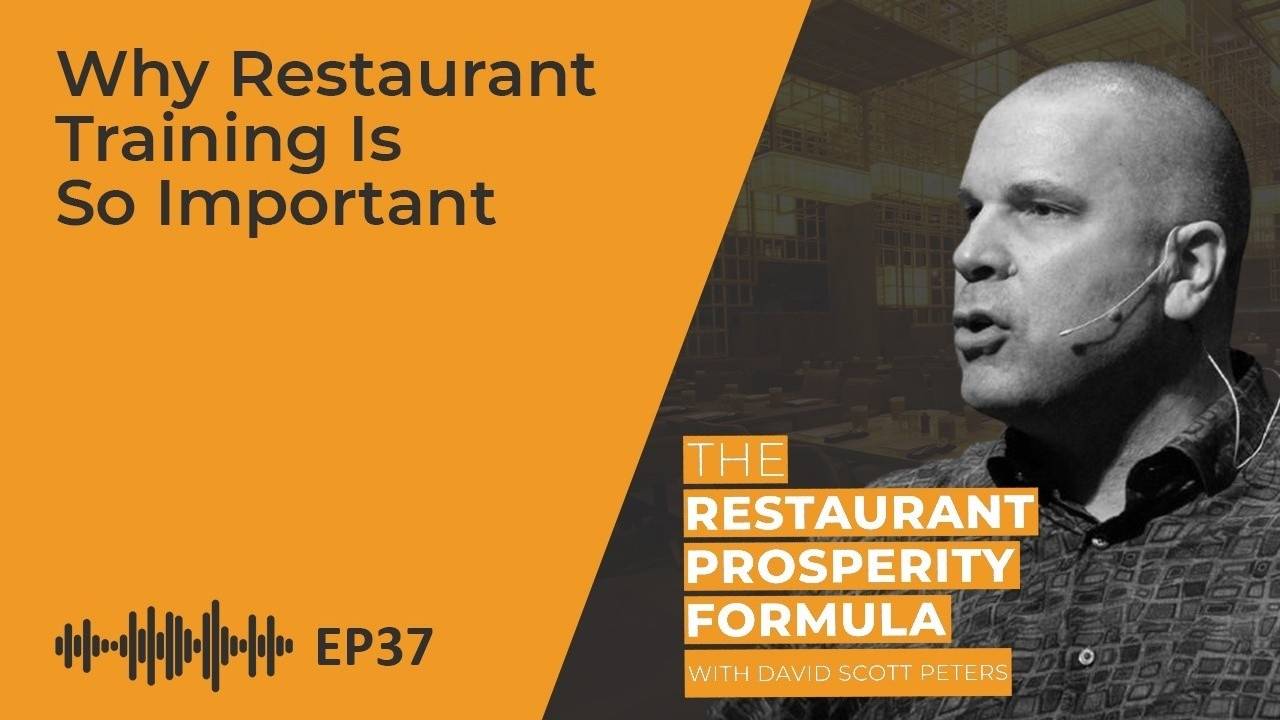
While the last couple of years have made it difficult to focus on developing a great employee training system in your restaurant, I want to spend this episode diving into why training is so important to the success of your business. To do that, I’ve invited Joe Erickson to be my guest for this this episode of Restaurant Prosperity Formula podcast. Joe is the chief operations officer and a partner at RestaurantOwner.com. He has owned and/or managed several restaurant/catering operations and now focuses on developing easy-to-implement, yet highly effective systems and processes to help members of restaurantowner.com improve their restaurants’ efficiency, product utilization and most importantly, deliver a more consistent guest experience.
I invited Joe to be part of this podcast episode because he and his partner, Jim Laube, understand the fundamentals of how to run an independent restaurant and has created an extensive resource for restaurant owners through their monthly membership including hundreds of downloads, forms, and items such as employee handbooks and training manuals because they’re good basic starting points for restaurant owners to cover the fundamentals of the business. RestaurantOwner.com also has restaurant success stories so others don’t have to reinvent the wheel and can see what other successful operators are doing.
During our conversation Joe goes into detail about:
- How important training is
- The consequences of not making training a priority
- What makes training effective
- How to start training your managers and team members as soon as today
- Why company culture is the key to restaurant success
- How training boosts your employees’ confidence
- The importance of continuing to learn
Joe also talks about the Restaurant Owner Learning System available on RestaurantOwner.com, which teaches leadership skills and also some business skills such as prime cost and menu costing. The 16 and counting courses are for owners and managers and a micro-learning section that has more than 80 videos that educate, train and inspire.
Continue educating yourself and make this the year you invest in yourself, your leadership development, your training and your business.
Click the podcast player above to listen in, or you can watch the video on YouTube, click here to download the latest episode.
Read the full transcript.
Hey there restaurant pros, it’s Dave Scott Peters and welcome to episode 37 of the Restaurant Prosperity Formula. I’ve been coaching restaurant owners since 2003 and the Restaurant Prosperity Formula is based on what the most successful restaurant owners I’ve worked with do on a daily basis to achieve their success. The basic premise of the formula centers around achieving prosperity, freedom from your restaurant and the financial freedom you deserve. To achieve prosperity, you have to follow a very specific formula made-up of leadership, systems, training, accountability, and taking action. Today’s topic centers around training, both training your managers and your team members and how important it is. Our guest today is Joe Erickson. Joe is the Chief Operating Officer and partner at RestaurantOwner.com. He has owned and or managed several restaurants’ catering operations. Joe’s role at restaurantowner.com is focused primarily on developing easy to implement yet highly effective systems and processes to help their members improve their restaurant’s efficiency, product utilization, and most importantly, deliver a more consistent guest experience. Listen in our conversation where Joe goes into detail about how important training is, what makes training effective, and how you can easily start training your managers and team members on the topics and systems you want them to know as soon as today. I want to welcome Joe Erickson to the show today. Joe, I want to thank you so much for taking time to meet with me today.
David, I tell you what, it’s a pleasure, always a pleasure. We always have a lot of fun when we do these things, don’t we?
Do. And we’ve known each other a long, time. So your business partner, Jim and I have known each other, gosh, since I think 2003. He started RestaurantOwner.com in what was it, 1998. So when I thought I was a pioneer, he was blazing trails. And I think you and I met not even a year or two after that. We’ve done a lot of things together and seen a lot of changes in the industry, I gotta say, right?
We have, and the changes in the industry, I wish you wouldn’t have mentioned the 1998 because some of these people on the call may not even have been born then, but we have been doing this a while, yes.
Well, lifers like ourselves who have a calling to help people truly make a difference in our industry. And again, I feel like a latecomer starting in 2003. Restauranto.com was a trailblazer and I kind of want to touch on the mission because this is why I was I feel very comfortable every time I promote you guys, I talk about you guys because what we do is very similar. However, nothing says it better than your mission statement. I’m going to read it for you. I know you know it, but our listeners will hear. Your mission statement is to change lives by educating and inspiring independent restaurant owners and managers to engage their team, delight their guests, and build an exceptional business. Can you talk a little bit about your mission and really what the calling is on restaurantowner.com?
Right. Well, I’ll tell you what, we go back to years when we were doing culture workshops and we started promoting mission statements that we learned from places like Powell’s Sudden Service, which I’m sure you’re familiar with. And they kind of created the perfect mission statement for restaurants. And one of the parts of that mission statement was to delight their guest. And we started thinking about that. we’re talking about to delight their, in other words, when we’ve talked about those components of the mission statement, all three of those things we talked about for the business systems and culture are the focal point of what we want to provide or pass on to restaurant owners. business systems and culture. So our mission statement reflects that. When we talk about culture, that’s taking care of your employees. We talk about our systems, that’s taking care of the guests. And of course, we have the business, which we have to worry about making a profit and being able to stay in business. And these challenges are things that restaurant owners face every day. So we try to make our mission statement address. those 3 pain points, if you will, or needs in the independent restaurant operator.
And what’s beautiful about it is there’s nothing new in this industry. There’s just a different spin on how we approach those things. Because what are the things I talk about? I talk about systems in place, I talk about company culture, talk about you have a responsibility to run profitably. It’s not like it’s groundbreaking. However, you have put together probably some of the best resources on the market for any independent operator in a member site. Talk a little bit about how you guys got to there and a little bit about what restauranto.com does in general.
Well, thank you. And yes, you’re right. We, David, you, me, Jim, we’re all in the same fabric. It’s because we’ve been in this business, we understand the fundamentals of how to run a restaurant. Does that mean each of us would be a great restaurant owner? Not necessarily. That takes that personal touch. That takes that drive and enthusiasm and the passion for what you’re doing. What we understand, though, there’s nuts and bolts to make any business run. If you’re a printer, you got to know how to buy printers and use printers and use them. And everything about how you staff or whatever the systems you use, the equipment you use, comes from that. RestaurantOwner.com said, well, people are trying to learn this business, or they may have been in this business with a large corporate chain or whatever. And the thing is, what they found out is that there’s systems and templates that they need. And so what we did is RestaurantOwner.com, we made our claim to fame by just doing hundreds of downloads for forms, employee handbooks. You and I have written training manuals together, and we use some of the same things. Why? Because they’re good, basic starting points for people to say, Oh, I need this in my restaurant. Now, they’re supposed to modify them, but you know as well as I do, some people, a little lazy, they just take them and use them, okay? Well, that part of the business is important because it helps them from reinventing the wheel. And these are the fundamentals of the business. And so our claim to fame was to have those downloads, those forms, a discussion forum to be able to exchange ideas and questions, but basically give them a library, a reference point that has articles, it has other operator insights. We share success stories, you know, because members want, they don’t want to reinvent the wheel and they want to know what other successful restaurant operators are doing. And if you, those two things alone are why we’re in business for what we do. We love sharing that, not just what we know, but what others are doing well.
I can tell you that to a member, those people who are either in your system or have been in your system for any period of time, when I get them as a member, tend to be some of my top performers because they already understand the importance of systems. They understand the importance of, I don’t know what I don’t know, so I need to learn all the time. need to learn and I need to share it with my managers. It’s critical. And so when I look in your site, everything is there. Everything any independent operator could possibly ever want. Now, that’s the positive. The challenge can be where the hell do I look? And that’s where your forums come in because they can go, where the hell do I look? And members help other members and you guys chime in and say, this is exactly where you need to be. And it’s an incredible not only affordable resource, but it’s life changing for many operators. I, if you spend any time on your site, I tell people, go to restaurant.com, go play some of your case studies or your testimonials, the people who talk about how your site and what you and Jim and the rest of your team have done for them is just amazing. Am I missing anything? Because it’s just an incredible resource.
Thank you very much. And you’re right. People appreciate it. Some of our longtime members, the ones who’ve been with us for five years, 10 years, 15, 20 years. And that’s not the largest segment, but I mean, it’s probably 40 to 50% of our current membership that’s active. And what they like about it, and some may only log in three, 4, 5, 6, 8, 10 times a year. What they like is they have that resource. It’s the bookshelf, like your bookshelf and my bookshelf, there it is. When I need it, I go to it, okay.
Right.
And now that dynamic, as you know, has changed. Technology has changed everything. The way we’re doing this podcast has changed from the original audio things we used to get on the phones with the headsets on and things. So, but in the industry it’s changed as well. And now we’re looking at video base. Now we’re looking at using the devices I use to communicate on a daily basis. We have the restaurant overstop magazine, which we send to people. And some people like that printed copy, but there’s other ones that they’re gonna spend all their time on their device. So we have to now be able to address this paradigm shift, if you will. and be able to meet people on their turf and in a manner that they want to learn because people want to learn in small bites now. I’m gonna give you a minute, I’m gonna give you 2 minutes, I’m gonna give you 4 minutes, but I can’t give you an hour. You know, the hour-long webinars, as you know, it’s the shorter ones that actually do a little bit better now. And it’s tough. So we have since, since 2016, when we redid this website, We have spent all of our time taking those very same templates and everything and putting it in video format for instructions or for our restaurant owner learning system that we have now. We take those templates, say, okay, let’s put them into the training. So we want them, the same goal, don’t have to reinvent the wheel, do what other operators are doing, the fundamentals of the business, make that available now so it’s easier for people to implement and get going, and I think that’s the big key.
Yeah, I’ve spent so much time switching to video over time. Again, audio. We had done what I used to call expert interviews and I put our interview that was recorded audio on a CD and mail it. Like things have changed. And with millennials and younger, we talked about as the training system we put together for hourly employees, The fact that you can’t have the six day training that is just so perfect because sometimes they’re in for only a couple hours in your store or they’ve got an attention span issue. And so you’ve got to have more flexibility and you’ve got to meet people how they learn. And that’s kind of where I want to go with you now. You know, we both focus on teaching independent operators the systems and tools they need to be successful. My focus has changed over the years from the time we met to where I focus now on restaurant prosperity, which is freedom for your restaurant and the financial freedom we deserve. Still backed by the systems and great management and accountability and all those things. We’re really not any different in that respect. We come at it with the business fundamentals from, again, business systems culture, as you guys put it in your focus of your business. But training, training, training is incredibly important. You’ve been at the forefront of training independent restaurant owners and their managers. And you’ve come a long way from just the articles to the videos. And it’s amazing to see how the site has grown and what you guys bring to the table. Can you talk a little bit about You put a survey out to your members in 2018. Can you talk about that? Because you asked about training and what they need. Can you dive into that?
You know, that’s true. In 2018, we put out a survey and we asked our owners what they needed most with respect to training. And, you know, we’d have thought it would have been assistance for staff and everything else. But at that time, It was we cannot find any good management training. That was the big thing. And we had over 800 respondents to that. One thing about restaurant.com, we have such a large membership, over 60,000 people have been through it over the years. And when we talk about that, we were able to get a lot of feedback from the people that matter. The answers they give us are the ones that matter. So this was a hot topic. So I mean, 800 people responded with information.
It’s just huge.
It’s huge. And David, that’s why what you do, coaching and being able to guide them personally through this journey, as where we stop it, we provide the resources, but it takes others to guide them through that. But what we learned was that they needed some tools to advance their training. And those three systems you talk about, business systems and culture, they wanted to teach them about the basic P&L, about prime costs, all the things that we talk about, the budgeting, CDs, which we don’t mean, we mean cash deposit, we don’t mean certificate of deposit, we don’t mean the CDs that we play things on, but the balancing of that. So the business, how insurance works, leases, give them knowledge so they understand the overall business and the impact of what they’re doing on a day-to-day basis. relates to that. Then we talked about the systems, which are the easy things for us. Systems are the way you do business every day, the same way every day. And if one person does it, should be doing it the exact same way as the other. When it comes to a recipe, when it comes to a station setup, when it comes to ticket timing, when it comes to anything, scheduling or whatever, these are systems and they gotta be the same every time. And then we moved in, and this is the big one where training comes in is the culture. And I think this is where most operators have struggled, always struggled, and will continue to struggle. And it’s the opportunity now for us to improve that.
It’s all good. It’s so if we kind of go backwards to the system side, I often say to my members that the systems part are easy. They’re tasks. Filling out a key item tracker, waste tracker, you know, filling out a checklist. Those are tasks. Getting your DSR filled, you know, tracker on a daily basis to make sure you balance are tasks. What’s amazing is what you do with the information, you as the owner, but it’s really about company culture. If you can’t get your managers to follow a checklist, to do things your way the same way every single day, to give the guests the same experience every single day, because that’s where we wow people, that they know when they show up to your place, it’s the same, the same dish, the same portion, the same service, the same everything, and it creates memories for people. That’s the magic. That’s company culture. All the other things are tasks. And do you guys see it the same way? I mean, it’s like this is easy. The hard part is the people part.
Right. You know, you hit the nail on the head. Those are tasks, the systems, what we do on a regular basis. But the culture comes from the manager understanding why we’re doing it. and their role in leadership. I mean, if we’re gonna roll culture into what is the one most important part of culture, leadership. You cannot ask someone to do something you’re not willing to do yourself or to do differently. You cannot ask people to follow you if they don’t believe in you. If you’re not competent, if you’re not caring, those are parts of leadership. Some are better than others. And the culture part of it and the training part of it that we try to emphasize for the training for managers is to not give them just those task skills, but insights in how to build trust, insights in how to be accountable and hold others accountable, insights into just the caring and giving feedback, taking feedback. These are, this isn’t new to the restaurant industry. This is any industry.
So why is training so important? We keep, you and I keep talking about training and this is what you primarily do, but why is training so important? Aren’t they just supposed to have common sense, Joe? Shouldn’t they just know because they see what I do? Isn’t that the way it’s supposed to work?
Yeah, that, you know, that’s funny you say that because I showed you how to do this, you know, the way I did it. Yeah, but Jose and Marilyn over there showed me a different way. So training becomes the system, if you will. The system of training is just as important as the systems you’re using in your restaurant, so that we’re doing the same thing every day and everybody’s on the same page. But the real reason training is important, and now we jump now, not just to the managers, ’cause that’s their role to lead, but the staff training, now we pull it down a level to the staff training, which is so important. is because of those things that if you take any Gallup polls or any culture building type of message from partnership leaders or anyway, a lot of the places we know of that specialize in building leadership, there’s some fundamentals that managers and staff, any employee wants to do, they want to know they feel valued at their job. They want to know they have the tools, and that includes training, to do their job the best. They want to know that someone cares about them and has asked for feedback on how they’re doing on their work. And they want to know what’s expected of them. And I think the training is the big thing that gives us the tools to do it and what’s expected of them.
I summarize to my members, I talk about training, truly understanding the old days. When you and I, because we’re OLD, we just won’t give away our edges per se, but we were trained by follow me for three days and then somebody had a rolled up newspaper like we were potty training a dog in the 1980s. We don’t do this today, but back then you rolled up a newspaper, the dog did his business on the carpet, you put the nose in the business and you smacked it with the newspaper going bad dog. And so I was trained every single day telling me what I did wrong. Like I followed you for three days, you think I was supposed to get it, but every day I walk in, what I’m doing wrong? And we wondered why we had such high turnover in management because You’re creating a situation where if I should have common sense or I should be able to just see you do something and get it, not understanding people learn differently, auditory, tactile, visual, that some people have learning disabilities and truly take 10 more times to see it doesn’t mean they can’t do it. They just need a little more effort. But we stop halfway and we treat people like crap because it’s like bad dog. You’ve done it wrong. You’ve done it wrong. You’ve done it wrong. Instead of hearing the Hey, you trained me what my job is, how to do it, how well it should be done more than point by when you stayed over my shoulder until I could prove to you I could do it all by myself and not ask any questions. And now you can walk in and find me doing something right. What a different culture that is.
That makes sense. Well said. And you took the words right out of my mouth. Training is about What does right look like? And that’s what it boils down to. You know, we shouldn’t have to go in there and rub their faces in the stuff, right?
Right.
Because we did get a harassment suit anyway. But anyway, the point being is that training is about what does right look like? What’s expected of me? How do I know? Can I do my job to the best? You know, these are important for people’s security. I mean, we got to realize people in the restaurant industry, Too many times we think of this as just a stepping stone, but sometimes it’s a stepping stone in this career. I had zero intentions of being in the restaurant business. I did not take restaurant school in college. I did not join a company thinking, okay, recruited to say, okay, I can run up through the ranks. I started out catering for $4 an hour part-time. And I was attracted to the business. The idea of always talking with people and hard work. I mean, 80 hours, 100 hours a week, sometimes like that. But it was rewarding. And a lot of people find that there’s a rewarding part of this business. Yet even so, the ones that tend, David, and you’ve seen, you’ve met him as well, that tend to aspire and be successful in other businesses, Have you ever noticed when you listen to their interviews that are completely different careers, right? They say, but you know what? My time in the restaurant business made me appreciate how I treat people, how I interact with guests, the social part of it. I mean, there’s just so much of a fabric that we, in our lives, people spend so much time in the restaurant business that you get an opportunity to learn that. So if we’re gonna do it, We want to make people feel valued while they’re here.
So can you, going along that line of truly making sure they understand what’s being done, what are some of the things that make one training more effective than another that you guys have found?
I think what makes the training more effective than the other is that our philosophy in training is we kind of keep it pretty simple because I think people want to understand what does a training program look like? And you know as well as I do, it can be overwhelming if you look at it that way. But Sharon McPherson works with us now. She’s our director of training. And we put our heads together and really defined what are the fundamentals of training? What do we really need? And we’ve identified that what makes effective training is making sure you hit those fundamentals. And that would be, you need a proper onboarding process. I’ll talk about that in just a second. Whether it’s back of house or front of the house, you need menu training. The type of menu training you get may be different for front of the house than the back of the house. In the back of the house, we’re doing build charts and remember portion control and quick references. And at the front of the house, we’re talking about descriptions and how we’re gonna share that with the guests and our knowledge. We know our allergens, we know what goes good with things. When people ask you what is best here, we don’t just throw off the highest price thing on the menu. We actually know the menu. And then the other part of it, it’s simple, the position training. So there’s three fundamentals. Onboarding, proper onboarding, which basically for the most part applies to everybody. There’s at least a big section of it. Menu training, which says I’m front of the house, back of the house. And then the position training, whether I’m a hostess, a busser, a dishwasher, a sous chef, There is specific position training that, and sometimes cross-referencing, line, cook, which might be grill versus saute and so on. So those are the three fundamentals. So what makes training better? Are you giving adequate training on those three things? And especially, David, you know as well as I do, when it comes to culture and the labor shortage we’re dealing with right now, people want to feel valued, they want to feel what they’re doing is worthwhile, And so the onboarding process, you explaining, this is our mission. These are our values. This is why we do this. This is the company culture. This is the owner. Maybe it’s a short video, the owner explaining, here’s how I got started. But you want them to buy into why you’re in business. And that’s the onboarding process?
And when you talk about onboarding, people often, when you’re a disorganized independent restaurant operator and you got somebody excited about wanting to work for you and they said yes to the job offer and they come in all excited and you’re like, oh, we don’t have your training packet ready. And Bob, the manager’s coming in and he’ll give you this. And why don’t you just follow Sally for the next 30 minutes till we get the stuff together. And all of a sudden you take this person who’s on a high, I’m also excited going, boom, this place sucks. What did I get into? When instead you show up and go, hey, let’s talk about here are the managers, here’s where you park, here’s what you got to do, here’s your expectations, here’s why we’re in business, where we came from, where we are today, where we’re going, what we believe in, here’s our core values, dot, dot, dot. And all of a sudden you’re like, that employee is now going, wow, they have their **** together to just say it bluntly. And that truly matters. That kind of sets the training for whether you’re going up trajectory up or down is that moment that you just start to orient that person. You agree with that?
I agree with it. We think it’s so important that very first day we have training videos that are in our restaurant or learning system addressing that very same thing is why it’s important to make that first day on the job their best day on the job. Well, it’s got to be excellent. And we also have a course that they can share with their team members on your first day on the job and what you should do and what, it kind of gives a guideline for what owners or managers should provide the environment, but also what are the expectations. And so when employees see this and they see that there’s something for them, they understand that, well, they hired me and they think enough of me to give me the tools I need and the training I need to do this.
So that leads us in, you threw it out there. It’s why I wanted to get you on for this interview is this is your pet project. This is your baby to truly revolutionize how you guys help independence truly put training in place and that’s your restaurant owner and restaurant owner learning system. Right. What is that? What is R-O-L-S?
You know, I keep trying to explain that to even people that work with us on there, but the restaurant owner learning system, what we did is we identified several years ago, as I talked about, we did the downloads, the templates and things like this, but people wanted more. They need to be handheld and led through. You see this when you do your group coaching, you know, everybody picks up something because they’re able to go go back to it. So people that want to train their staff and everything, it’s overwhelming in how they do it. So they said, we need help, we need tools, we need a guide on how to do this. So we created the Restaurant Owner Learning System on two platforms. And the first platform is that general membership, all members, owners and managers, when you belong to restaurantowner.com, you immediately get three managers and we have other programs that allow you to have, we’ve got some people with 100 managers. We got some larger groups with us as well. But what that does, it gives them the restaurant learning system a place where they can take some online courses that we’ve created, like such we talked about building accountability, building trust. So basically leadership skills and also some business skills. Why prime cost? How do you use our prime cost template? We teach them things like menu costing, why it’s important and how to use the resources we have to get that done. We teach them things like greeting and hostess. In other words, these are courses of why it’s important. So those type of courses are very beneficial to both management and staff, depending on which role they’re addressed to.
And those are included in my regular monthly membership, where I get all the other resources we talked about, the help, the support from other restaurant owners, and that’s just a part of your membership.
That’s just part of the membership. It’s just another avenue, if you will, a platform to be able to help educate, train, inspire. That’s the key, inspire. And they can go back and revisit it. And when managers change, they just come back and they put the new name in, they come down and the new manager learns these things. So we wanted to give them those resources. But the learning system also includes, and we’ve got about 16 courses in there we do now. We’re adding more all the time. But the big part is the training videos. This is the micro learning training video section. And we’ve got almost 80 in there now. And they’re, each one of them is.
I was looking at this list going, I cannot believe how many video, I mean, there’s pages and pages of videos.
I think we’ve added some since I sent that to you. There’s all, we have a production crew like you do that’s always working on new ones we do. So we do these microlearning training videos for both front of the house, back of the house, management, and even owners, in some things, where we try to within two, hopefully no more than six, we try to stay in that 2 to 4 minutes. Take a topic, address the what, why, and how of that topic, and point them to resources we have to take that information and implement it, okay? Which you and I both know, the toughest part of any of this stuff is implementing it, okay? So the restaurant learning system includes those microlearning training videos. Through regular membership, you can share them with your three managers, up to 30 staff members, and like I said, you can upgrade them for 10 bucks or a few dollars more a month. and you can increase that to whatever number of employees you have. It allows you to add team members that come in and, okay, let me just back up. Managers and owners have direct access to restaurantowner.com. So they get to all the resources that we have, including the learning center. But they also have the ability to add team members and share selected stuff, because they don’t want their team members all over the site, okay? I mean, heck, the secret’s there, why they’re doing this, say, Oh, they don’t know that. They just got that from restaurant.com. I mean, they gotta look smart, right? So we have what we call a team portal. It’s just a restaurant.com/team. The team members can log in, and their personalized training systems are there. if they like the power of a smile. They wanted to watch the video of the power of a smile or the 10-4 rule, you know, the one where if you are within 10 feet of people, I make eye contact within four, you verbally say something. So all these little tips on becoming much better at hospitality or much better at leadership or much better at recognizing guest behavior. or safety or whatever. Well, we’ve developed these and especially back at the house, what we’ve really done is we’ve done a lot of these training videos. We’ve got an excellent chef, Omar Pereni is working with us now. And I think he’s done about 40 or so. Wow. Medium still in production, but they’re also in Spanish. And that is really working well. So any video you can go say, I’m gonna watch it in Spanish, you wanna watch it in English, and there you go. So these are tools that that the owners and managers can see, say, I want my staff to see that. I share it through the team portal. They get a login for the team portal. They only see what is shared with them.
Well, it’s kind of a reason why I wanted to pull you on here. So I remember when we sat in your office and you were talking about building this and how excited you were about it, because there’s truly a need in the industry. If there was. A #2 question I get asked, right? It’s #1 question is always, prime cost related, food cost, labor, it realms in there. The next is, how do I train people? Do you know somebody who’s got a training system for my people? I want my managers to learn this. I want my people to learn this. And yes, there’s learning management systems that you can build everything from the ground up yourself, and you got to create your content and the videos, and you’ve got to create your written word, and you got to create your assessments, and you got to do all these things. And it becomes a Herculean effort that often stops people dead in their tracks, let alone the monthlies to keep it up and running because now you need a URL, you need software, you need somebody to maintain it, you got your monthly expenses, you’ve got equipment. And they go, holy crap, screw that. What you’ve created, I almost think is your, even for you, your best kept secret. Like, I don’t know that everybody knows what the hell you’ve put together and how good it is. And that’s why I wanted to pull you on to get the word out to go, by God, what everybody’s been looking for, you’ve built it.
Thank you. And You’re right, because the other part of the restaurant owner learning system, we talked about what was stocked with membership, okay? But we have a premium plan that you just, for a few dollars extra a month, you upgrade, and that platform is that LMS for the independent restaurant owner. And we don’t, we need to give you a platform that you can what we kind of say, build training systems in minutes, not months, okay? I wish it was true. It is minutes, it’s just triple digits. But the thing is, is that we wanted to make it easy to put together a fundamental program because when you have the resources or the management or maybe a human resources director or a training director, as you grow, you can put people on those and I mean, just take that and put it on steroids. And there are a lot of great LMS systems out there. But typically for the independent operator, it’s just what you said. It can be Herculean effort. So we did ours so you can put something together quickly. That being said, we know that a lot of operators, a lot have already filmed their menu items. Okay, I’ve got a picture of it and I put it on Google Drive and I tell them to go see it. But there’s no tracking. There’s no accountability. I’ve done a lot of the the lessons, if you will, but I need to put them together into a program, a structured onboarding, which is the orientation. Here’s what I want them to know, my company, my do’s, my don’ts, my clock in, clock out, our POS system, all the natural things, a tour through the business, and the why we’re in business. Those things are in the onboarding. And when it comes to the menu, you needed a way to be able to upload your, I mean, it’s easy. We can take with these cameras and just take pictures of the phone with our phone and we get great shots and it could be a video or it could be an image. So we give them a platform to not only show that on the learning system, but also templates like PowerPoint presentation templates to be able to put that together so you can show something very professional looking. So that second part is we allow them to upload their own custom content and here is the difference between us and other LMS systems. we can blend it with the microlearning and the lessons that we have. So we, a lot of times when an employee hears a manager say the same thing over and over, eyes roll in one ear, out the other, you know what I’m talking about. Yep, yep. But when a third party that’s professionally designed, you know, produced, when David Scott Peters is saying something and they hear it, Then it drives home, oh, they’re not the only ones saying, this is kind of how you do things, and this is what is expected of me. So that blending of those third part, that message, what we say is important on restaurantowner.com, being able to mix those with your own custom training and put them into a logical learning path, and not just for new hires. This is also for, we can use them for shift meetings. I mean, the ongoing development training is the key to retention. You can’t stop with the four day schedule. I work whatever, I pass the test, which by the way, that needs to include assessments and having those tests when you do that. So we give them the opportunity to take a topic, teach them about it, whether it be for new hires or ongoing development, create a quiz to measure their progress and give them something that they can go back to. And as new things come up, a new menu item. Maybe I put it out there, I put it in their training. I want them to watch this. Why? Because we know we talk about shift meetings, right? How many questions do you get? I know that we get a lot of them on how do I get my shift? They never work together. I got two coming in at nine. I got two more coming in at 11. And then by that time they’re on the floor. I don’t want to take them off the floor. So a lot of times that video access or platform that you can get to them where they can see it on their own time and still track it and get paid for it. But having those type of platforms that allow them to work on their devices can really supplement the training, feeling valued, feeling like you know what’s expected of you and all those culture things we talked about.
It’s really incredible. for those people listening to us, if you don’t know what an LMS is, it’s a learning management system. It’s just a matter of putting together your classroom, your content, online learning. But again, if you’re doing it from scratch, it often is very expensive, time consuming, and stops you. What you’ve done at restaurantowner.com with your baby, as you said, here’s a wealth of video knowledge with assessments. You can have multiple, 30 people plus come in here and you can know that they did it, track where they are. Oh, by the way, you want to upload your stuff and use ours to supplement? All of a sudden you’ve got this incredible library that has been built for you and you just have to fill in some of the missing pieces instead of starting from scratch. And because, again, Everything is driven off your phone. You can take the video on your phone, just shoot it up there. We don’t need to go to a professional videographer and make it just magical. People have a $1400 camera, 4K camera in their butt pocket. Use it. Who cares if it’s the lighting isn’t perfect? It’s the knowledge and then it’s you sharing. I think it’s I think it’s incredible. And you know, I can only think that your platform is just going to explode because I know you guys, you never stop.
No, we’re not going to stop. Age will stop us eventually, you know, but we’re not going to stop anytime soon. And we’ve been building a team passing it on to the next generation that have developed these philosophies, the philosophies that you have, that I have, that Jim has. And we’ve developed a team and expanded that learning system that what we’re doing is we’ve also created, remember we talked about the templates for the downloads. The big thing, and we’re getting ready to release this here second quarter. is a whole library of those templates, just like you said. In fact, if everybody knows who the restaurant already fills in the restaurant name, and those employee handbooks are already going to be broken into lessons for you. can just say, I’m going to use this employee handbook, and I’m going to change each section as I want to. Instead of changing on a Word document, I’m going to change it in my form. And if I need to change it again, I go change it and it’s automatic. I don’t have to go print things back out again and hand out manuals to people. So we do the employee manuals. We’re doing it with position training. We talked about the online part of it is simply the classroom part or the tracking. We know that the main component is the hands-on and guiding them through that. But the online can help keep our training agendas, our training schedules, our checkpoints where the trainer signs off on I’ve taken them through this. It’s our tracking method and it’s our platform for the things that cost money for one message. I might as well just go online and have that message, same message, the same one every time, not on how the trainer was feeling that day, right? The things that are important that you want everybody to get the same message, that’s what an online training is for. You still need the hands-on, but what we try to do is guide people through that as well.
Again, I can’t say enough good things about you guys, what you do, and now this learning system. And again, it’s not this brand new thing anymore. It is something that is truly full of content, easy to use, can make a difference. And it’s exactly what people ask for. They ask me, I’m in the process because I’ve got my video library for my group coaching program and my members are already coming to me saying, well, how do I direct my managers through that? And it’s ominous on my side. I know what it takes to build this and it’s incredibly affordable. It’s something everybody can use and use immediately. Where would somebody go to learn more about this learning system?
If they simply go to restaurantowner.com slash training. That’s it. Restaurantowner.com slash training, you’ll lay them on a page and that’s where our info page starts and new things we put out there and they can kind of learn about it at that point. And they can also, from a lot of our members that are implementing this, a lot of them already have They’re using other platforms like ExpandShare or Spooks or all the buzzword LMS, which are great programs, but what they don’t have is the library of the RestaurantOwner.com content. We’re gonna make the lessons that we use in our online courses, like Jim, I gotta give kudos to him. He did an excellent one on the Ultimate Guest Experience and people love that really because it shows the journey, the touch points that you have coming into the restaurant and does a very good job of explaining the why guest experience is so important or why the employee experience is so important. And people say, I want to use that in my custom training, but I don’t want to watch the whole course. I just want this lesson or that lesson. We’re making those lessons available so they can drag them into their own training as well. It’s literally, we’re on a podcast, so I can’t show you that now, but it’s literally when you’re on the setup, it says, okay, here, drag my custom content, upload it, drag this, mix it around, here’s a quiz, I’m gonna put my quiz in. reorder it and say, that’s section one. That’s my onboarding. I love it. It’s ready to go.
What’s beautiful about that is I know that some restaurant owners are hearing, oh, I’ve struggled with computers and so on. You can put your content together and you’ve got plenty of young people on your team who go, oh, I can get right on there. And because it’s drag and drop, weezywig and so on, they can whip through it like there’s no tomorrow. So again, give up the task. But let’s lead that into implementation and use on a daily basis and then your life changes.
Right. The other important thing I want to mention is that we have an iOS app for this and an Android app. We’re already redoing them. We found ways to make them even better for the team portal so that it makes it real easy for them to know exactly what they have. It’s easy to put together. There’s something else I want to say about that. When it comes to things like if you have another platform, We are making our content available. We have an API, that’s the interface where other programs, should they want to, like expand share, in fact, holler out to all of them and have them contact us, is that we can make it available so that if you’re on one of those other platforms, we still want to give you the tools, the training. Our resources are available on those. If they will work with our API, then we’re ready to go. So these things are so important. the accessibility, the devices you use on, the flexibility to work with the systems that you already have. We have one pizza chain that’s got like 18 restaurants or whatever. They had a ton of videos on Vimeo about how do I make my pizza sauce, how do I make my Alfredo, all these different things. It was great. We just simply link to those or link to their YouTube channel and bring those right in. They don’t have to upload it, they don’t have to rewrite it, it’s something they want to include. we want that type of flexibility there for everybody.
It’s fantastic. I’m so appreciative that you guys agreed to come on today and share this story with everybody. I hope everybody who’s listening to us, if you’ve got a restaurant, you’re crazy not to go to restaurantowner.com and look at their membership, but really to take your training to a whole new lever, go to restaurantowner.com forward slash learning because this is how we, right? It was learning. I got that right. This is how you make a change in your business. It’s not you standing there every day correcting everyone. That makes you a prisoner to your business. Instead, you’ve got to have your system, your process, your way, and it’s got to be trained. And if you train people and they know what the job is, how to do it, how well it should be done, more important than by when, then holding people accountable to those systems, the way you want something done, becomes so easy for your management team when you’re there, but especially when you’re not there. Training is critical. Is there anything I’m missing to that? Is there anything else you want to share with people before we go?
There’s one other thing I want to share. It’s a secret. I haven’t even told you about this. And by the time this, you know, when we’re reviewing this from time, throughout time, they’re gonna be reviewing it, is we are now adding a component. And like I said, Sharon McPherson is working with us. She has got an excellent career with, she’s trained at a high level and put together training programs for Applebee’s, Sbarro, On the Border. tgi friday’s is where she got her start on doing all this stuff. So major change, because the change do a much better job of training than independents. That’s part of their systems. They’re changed because they had those systems in place. Could they be improved? Yeah, they could maybe improve the way they treat the employees or whatever, some of them. But the point being is that they already have these systems. And what we’re putting together, we’re going to be releasing here first, second quarter, that’s puts us in March, I guess, is we have an add-on that if you don’t have time to do it, we have the implementation for it. So it’s a team to help put those building blocks in place, how to use the systems, If you don’t have people on your staff, which at this point, restaurant owners and managers are picking up, they’re making pizzas, they’re grilling hamburgers, and they’re taking people’s money because of staff shortages and things. If you don’t have time for that, we’re giving you another tool to help implement and get it started. Because people, don’t you agree that people talk about the labor shortage? It’s kind of like What do they call that? A catch-22 or a never-ending circle is that I don’t have enough time because I’m working too hard to train to get the people, but then I can’t keep them. And I can’t keep them because I don’t have my sisters and my training and my culture in place. but I don’t have time to start all that. So it’s like this vicious cycle.
Most people leave because they don’t know what their job is, don’t know how well they should do it, and they’ve got a manager above them doesn’t know either, so treats them like hell so that you don’t think that, you don’t realize, I don’t know. That’s why your industry got to the point we are right now. We’ve got to train. We’ve got to treat people better. Company culture is critical. You’ve addressed all those things in this system, and now that extra, can’t wait to see what happens in March. Do it for me? That’s incredible.
If you and I were going to take for our sites and put, we always like to put these elevator statements or elevator pitches and things like this. I would have to say that a short one would be training equals retention. And I don’t think there is a more powerful way to understand that. If you want to get rid of the cycle of And training is important because you need the proper training. Because just saying you do training, people wouldn’t be leaving if you did what’s really important in training. In other words, building them up and giving the tools they need so that your culture, the training’s got to be to raise the culture. If you can’t raise the culture, you’re always going to be training and you’re going to be spending money. And they say, well, what happens? I spend a couple of dollars. What happens if I train for three months and they leave? And the answer to that is, I’ll let you take that. What happens if they stay?
Right. Yeah.
An untrained person, what happens if they stay, right? Yeah.
And this is where we get our love-hate relationship with the Yelps of the world and the TripAdvisors. Like, you know, oh, that customer doesn’t understand. I’m sorry, where there’s smoke, there’s fire. You have 8, 10 people on the floor that are fantastic. You have the one that wasn’t trained properly, that nobody wants to correct, and you’re short staffed and you keep on your team destroying your business one guest at a time. And you could train them. You could on a daily basis. Training happens on a daily basis at pre-shift, at one-on-ones and pull-asides and all these things. But all too often, We don’t have systems. We don’t have training, which means we don’t have leadership. And quite honestly, it comes full circle to where we started. The number one reason why restaurants fail is lack of leadership. And just because you own a restaurant doesn’t make you a born leader. It takes systems to make up for our weaknesses to lead your business to success. And this training, your learning system is a key component to that.
David, thank you. And that’s why we love working with you because you have been a champion of this for, like you said, it goes back to the.
2003, man, a long time ago.
So we appreciate the opportunity to come on and share this with people. Many of our members are your members. They always will be. Why? Because they’re learners. And they want to continue to learn. There is nobody in the world that has one place that they learn from. We’ve got a, we like to share directly with some of our members. we have thousand members, so we can’t do it every day with everybody. But we have one in particular member. I won’t mention his name right now. But he said, he goes, restaurant, I’ve been a member since 2013. And I’m going to go I’ve only paid 15 bucks a month because he was grandfathered into old pricing. I’ve been doing this since 13 years, but in December he signed up for the customized training because he knew it was a platform that was affordable. It looked like it could be implemented. Plus he has a voice. He’s already given us feedback that we’ve already implemented changes, which is how we created the whole system anyway and what people are telling us. And he said, my resources are, and I’m going to mention, People say our competitors, there is no competitors in our business, right? They’re just other helping people do that. So the library gets bigger. Instead of one bookshelf, I got two bookshelves or three. Restauranto.com, TMQ, and Pizza Today. He’s a pizza guy. Those are the three things that he keeps up with what’s going on. And that would probably, you know, if it’s coaching, I belong to David Scott Peters, I belong to Restauranto.com, I may be doing my… LMS, whatever, maybe reading restaurant business. I mean, you can never quit learning. The reason we’re in business and we keep the people that keep it a long time is because they want to continually learn, period.
Amen. Joe, I want to thank you so much. I hope everybody reaches out to you, goes out to restaurantowner.com forward slash learning, learns about the learning system you put together, because I think it’s a game changer. And again, I want to thank you so much for being with me today and sharing your story.
David, thank you very much. And to everybody listening, thank you and we wish you much success. We hope this year, we’ve had some challenging years, is better than previous years. And David and I, we were having that discussion ahead of time, we truly feel this is the opportunity this year. Make those changes, address those things, position yourself well because Folks, we are in an industry that people want to go, I mean, they got pent up and couldn’t go out and boy, they’re coming back with a, as soon as they can, they will come back with a vengeance. I say a vengeance, enthusiasm.
Amen. Thank you, my friend. Hey, that was an awesome episode. I want to thank you for taking the time to take action on building a better, more prosperous restaurant. Before you go, I want to give you these three thoughts. One, by combining leadership and taking action with systems and training being checked by accountability, you are on your way to creating prosperity for you and your restaurant. Two, I have something I need from you. Please leave a review on Apple Podcasts, Spotify, or wherever you happen to listen to podcasts. By leaving us a review, other restaurant pros seeking out this information are able to find it. I read the reviews and hearing how this information has benefited you does wonders for me. And three, if you find any of the discussions helpful, share them. The more restaurant pros who have access to them, the better we become as an industry. For more restaurant resources or to get in contact with me, connect with me at DavidScottPeters.com. Be passionate about what you’re doing. Be persistent. But more importantly, become better and help everyone around you become better. And your restaurant is going to kick some ***.