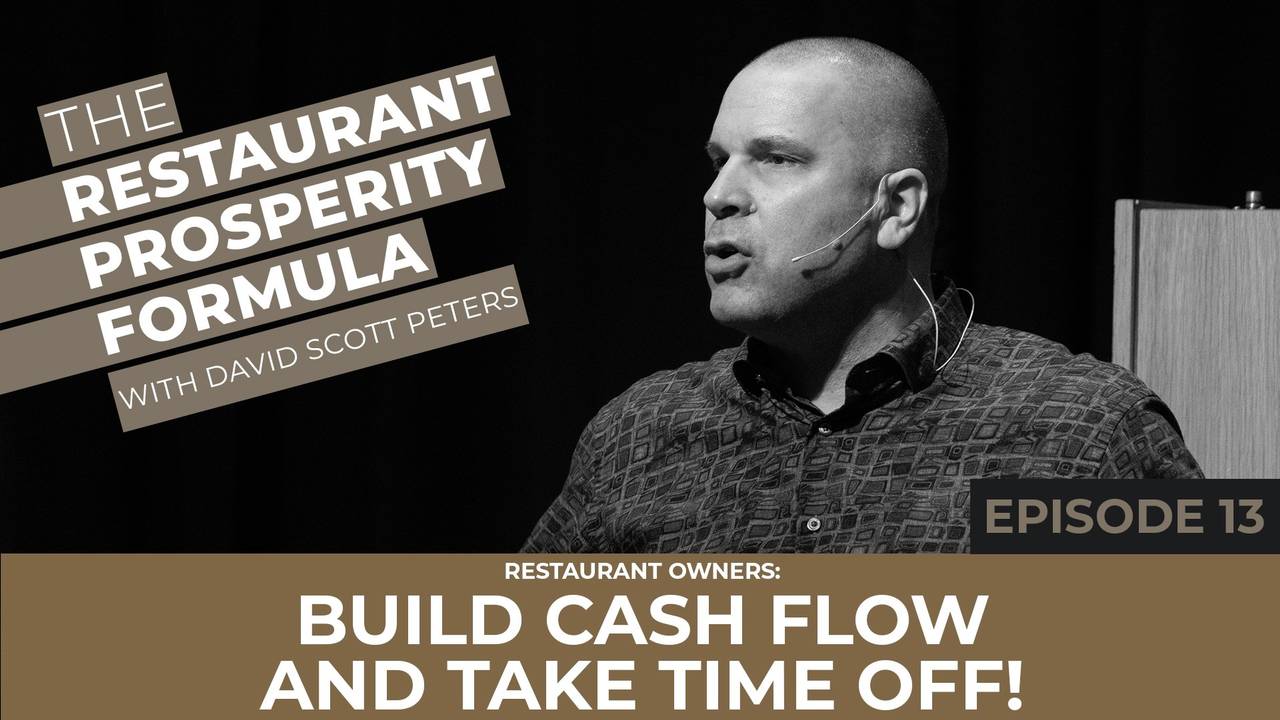
To achieve prosperity in your restaurant – including cash flow and time away from your restaurant – you have to follow a very specific formula made up of leadership systems, training, accountability and taking action. In this latest episode of my podcast, The Restaurant Prosperity Formula, I talk to Brian Mueller, owner of The Blue Coast Burrito in Cookeville, Tenn., which is a part of a small growing franchise system.
Brian has recently transitioned from a general manager to owner. We’ve been working together to keep his business thriving during the pandemic. Brian was already a seasoned hospitality professional, but he quickly learned that managing a restaurant is one thing. Running a successful business as an owner is a whole other challenge.
“I had no idea all of the all the different avenues, all the different parts that come flying at you as the owner and then just making that transition of being the owner. I’m a hands-on guy, doing the work day in and day out and really tied my worth to all that. I got paid a salary as a manager,” said Brian. “Right now, as the owner, I’m responsible for keeping all these people working. I’m responsible for making a profit and it ultimately falls on me. I’ve taken on that responsibility. And it is it’s been very good. But at the same time, I realized how much I didn’t know and I continue to want to learn.”
This is a great conversation between the two of us as Brian breaks down his transition from manager to owner, how he’s learned to make that shift, the resources he’s used and his appetite for continuing to build a successful restaurant.
Tune into this conversation, he shares how he’s transformed his life and business in just a short six months through:
- Understanding his role in the business
- Breaking away from old habits
- Trusting others to get work done
Brian also shares the secret to his success, which includes how he has time off each week, how he can depend on a bigger bank account and the prospect of a second store, all during a pandemic.
If you were set to have a great 2020 and everything went sideways for your business in March 2020, Brian’s story is a great one for you. He had the best two or three months at the start of 2020, things going through the roof, when all of a sudden the world literally changed. Brian tuned into some important cash flow webinars I did, then took what he had, the knowledge he had, combined it with what I was teaching and got to work making sure his business could continue to operate. He got over the idea that things had always been done one way and decided to start trying new things.
“I’ve always known that I needed direction and guidance and encouraging and prodding to get it done and to be able to sit back and reflect on where we’ve come from, that’s what’s been good about this [having David as a coach],” said Brian. “I mean, we’re only six months in, and I’ve just scratched the surface on some of the things that we’re working on and that you have to offer and that you’re able to share. And not only that, all of the other restaurants that are part of your group and a part of your organization, we also get to receive that benefit as well.”
If you’ve wondered what a coach can do for you and the growth of your restaurant, Brian’s experience is a great one to listen to. He also talks a lot about shifting responsibility to his employees and bringing his daughter in to play a key role every restaurant owner needs: the implementer, the person that gets stuff done.
Thank you to Brian for sharing his experience. I hope it inspires you and encourages you to honor your love of your restaurant.
Click the podcast player above to listen in, or you can watch the video on YouTube, click here to download the latest episode.
Read the full transcript.
Hey there restaurant pros, it’s David Scott Peters and welcome to episode 13 of the Restaurant Prosperity Formula. I’ve been coaching restaurant owners since 2003 and the Restaurant Prosperity Formula is based on what the most successful restaurant owners I’ve worked with do on a daily basis to achieve their success. The basic premise of the formula centers around achieving prosperity, freedom from your restaurant and the financial freedom you deserve. To achieve prosperity, you have to follow a very specific formula made-up of leadership, systems, training, accountability, and taking action. Today’s topic tells the story of 1 man’s journey from seasoned general manager to owner and how he learned to thrive during a pandemic. Now I want to tell you about our guest today, Brian Mueller, owner of the Blue Coast Burrito in Cookeville, Tennessee, which is a part of a small growing franchise system. As I mentioned, Brian was already a seasoned hospitality professional. But he quickly learned that managing a restaurant is one thing, running a successful business is a whole other challenge.
Listen in our conversation as he shares with you how he’s able to transform his life and business in just a short six months through understanding his role in the business, breaking away from old habits to trusting others to get work done. Brian will share with you the secret to his success, where he now has time off each week. management he can depend on, a bigger bank account, and the prospect of a second store all during a pandemic. I want to welcome Brian Mueller to the show today. But first, a word from our sponsor. This episode is being brought to you by The Catering Coach. If you are a restaurant owner, now more than ever, you need catering as a profitable, proven multiple revenue stream. But right now, who has the time to establish all the checklists, systems, packing lists, and proven methods to grow your catering business? And who are your catering customers when there are very few catering events?
You need the catering coach. Sandy Coram, the catering coach, and her team will show you the path to immediate catering profits by taking out all the guesswork of what works right now in this ever-changing world. Catering is not what it was last year, but catering is still profits, profits, profits. Learn the systems, learn the checklists, learn the out-of-the-box methods that successful restaurateurs are using right now to be catering profitable. Just visit thecateringcoach.com forward slash DSP. I want to welcome Brian Mueller to our show today. Brian, I’m so excited to have you. Thanks so much for taking the time to be with me.
David, I’m excited to be here, be a part of it. I mean, as I was contemplating all of this stuff as we were going into this, it’s really been a neat route over the last six months. So I’m excited to kind of share that.
Cool. Well, let’s talk a little bit about your background, because you’re not an atypical owner for me. I typically have independent operators. Now, you’re part of a system, and I’d love for you to share a little bit about the Blue Coast Burrito and kind of what that is, how you fell into it. and really kind of your journey so that we can then share with how you’re really seeing a change in your life, not just your business, but your life. But talk a little bit about how you got into the business, how you got into this specific business and ended up being an owner.
Well, I’m an old school restaurant guy and I left the restaurant business, did a few things in between and now Gotten back into the restaurant business about nine years ago. I walked into Luco’s Burrito, which is a quick serve restaurant. Build your own burritos, tacos, salads. We can figure out how to do it. We’ll put it on a plate for you to eat. And didn’t want to get back into the restaurant business at that particular time, but had to go to work. So long, I mean, just over the course of the spirit, I just do what I do. I love the hospitality industry. began to moving into, they had a manager, I had an owner manager in there, not doing a lot of the right good things. So anyway, I stepped up, started doing the things I did. Long story short, the other two owners came to me, he said, are you willing to run our restaurant? And I did. And at the time it was in very bad shape, not doing the volume. The other owner was really walking off with a lot of the cash and all the stuff that could go wrong could go wrong. So in that meantime, I did what I do. I manage. I manage the restaurant. We grew our sales. We grew our reputation. And then through the whole process, the opportunity came along for me to buy it about two years ago.
And so you from the ground up as a restaurant manager by I’ve tried to get out of this industry three different times. It’s like it’s a disease. Hospitality is a disease that you really love when you’re in it. So you kind of walked in and said, I need to change professions back to being a restaurant operator. But you started as a general manager and this is a franchise, right? This is a system that literally is got units all over the country, correct?
We’re not. We’re actually, that’s one of the reasons that intrigued me about this one was to get on the ground floor of an up and coming franchise.
Okay.
Because they really only have 14 stores. And so they’re new in the process of franchising, if you will.
Right.
So, but they had all the recipes. They had all of the they gave you, they blessed you with their Bible and their stuff and there you go.
So you came in as a seasoned operator, you came in and really just kind of took to their system, was able to make more money for the current at the time, the current operators, and then they approached you to buy them out. So what was that transition like going from a manager to you being the owner of that business? I mean, that’s not an easy thing. I tell people like when I was a manager, I always tell people I was the ****. The moment I became an entrepreneur, I was like, it was like the black hole of death was my desk. There’s so many things coming at you. It’s just not the same. Talk about that transition from manager to owner and what that was like.
I am, of course that’ll always be the process and I’m still learning the process. I had no idea all of the different avenues, all the different parts that come flying at you as the owner. And then just making that transition of being the owner and allowing I’m A hands-on guy. I’m the one that’s in there doing it day in and day out. And really my worth and all that, I just got paid a salary as a manager. Now I’m responsible for keeping all these people working. I’m responsible for making a profit. And it ultimately falls on me. I’ve taken on that responsibility. And it is It’s been very good, but at the same time, I realized how much I didn’t know. And I continue to, I want to learn.
Yeah, and isn’t it, I want people to truly understand because often managers look at the owner and go, man, you’re making all this money and this is easy and I’m doing all the work. But people don’t understand what it’s like to work on workers comp and payroll and make sure taxes are paid and marketing is done and the HR issues and then there’s inventory and procurement of product and making sure it’s utilized properly and labor and all the labor laws and like this all happens at the same time. I think being a restaurant owner is probably the hardest job there is out there because Most companies have a department head for all those things. You are the department head. And it really is a wake-up call. I mean, if you were to sit there and talk to a general manager of another restaurant and say, oh, you’re looking to open your own business, it sounds romantic, it sounds easy, but it’s not, right? It is romantic when things go well, but it’s not that snap your fingers and just as you are a great manager, but you doesn’t necessarily translate to being a great owner. Is that correct?
That is very much correct. That is very much correct. And I am needing to learn to take on that ownership and let go of some of the managerial studies and make sure that putting those into place, putting the systems into place and holding people accountable. And so it’s been good for me to make that transition, but it has also been difficult. Some of them just.
Talk about, what are some of those challenges making that switch? What were those like?
The biggest thing is, the manager, I’m worried about every little aspect of what an employee might be doing or not doing on their shift to be sitting here doing the work. And I’m looking over the camera, looking out and see, and just not able to accomplish the things that I needed to get done because I was continually still trying to manage the day-to-day, hour to hour, minute to minute operation. And there are times for that, but not all day long. And that’s what I was finding. The challenge for me is I was not able to do the accounting practices, look at my numbers, get into some of the aspects of some of the things that you’ve taught me over the last six months from whether my reports were actually accurate or not. to projecting. I mean, it was all in my head. I knew it. I knew what to expect. I knew what was happening, but that doesn’t get it out to everybody else that what my expectations were. And so that’s probably one of the huge challenges for me is just getting what’s in here out to other folks. And and allowing them to work within those parameters.
It kind of falls along. There’s a great book out there. Michael Gerber, author of The E-Myth Revisited, follows a pie shop lady, right? Makes the pies, incredible technician and then manages the business, but falls off on the, you know, somebody else doing the job, making the pies doesn’t do as good job, but then needs to grow the business, manage the numbers, be an owner. And the truth of the matter is we fall into our comfort zone. And for you, you’re already one step ahead of most people, like great chefs that often open or restaurants are great technicians and they would make their food and do all that and ignore all the others. Don’t manage the numbers, don’t manage the people, let alone be an owner. You already knew to be the great leader of your business. The challenge was, hey, now there’s all these new responsibilities that weren’t necessarily a part of ever opening up to a general manager. Again, insurances and liability and all the things that go in there. Giving up control is difficult. Right? Or I should say giving up responsibility without giving up control, having others do the work. Talk about some of that challenge because as we, what people don’t know is, You, by God, are a true hospitality professional. You care about the guests so much that you will bend over backwards, whether it’s a charity, a customer standing in front of you, or even your internal customers, your employees. You are a giver. And you will do whatever it takes. In fact, what people will learn about you from me saying this is Man, if somebody had a schedule request and there was no other employee to cover it, like you come out of the woodwork and you go in and you’ll cover a shift because you care so much that you want to be an employer of choice. And because you’ve always been that manager, that person that takes care of your people. What is it that transition of being the best manager in the world to owner, what were some of the the hardships or challenges you had mentally about having to leave that role and allow others to do those kinds of things that you used to do? Like, for example, maybe not doing it as well as you would.
It’s learning to pick your best. For me, it’s been learning to pick my battles and also trusting to know that other people as much as I love and care for them, they love and care for the things that they do too. And it’s actually learning to believe and having my belief in other people that can, that I, yeah, I can do it all, but that’s not going to give me what ultimately what I want. And then obviously I’m tired of the restaurant and I’m not able to enjoy some of the things that I enjoy doing and getting away from the restaurant, which is important and healthy to do. And that’s one of the things that I’m finding.
What did your work week look like before you started implementing systems and learning your role as an owner? Like how many hours would you put into that business for the last couple years?
Over the last couple years, anywhere from 60 to 70. And I mean, even then, seven days a week, I would, whether I might have had a day off, but still pop in, still not really unplug and get away from the restaurant, if you will. And I was always the guy that if there was a problem that they would call, instead of having, okay, this is a list of who you call if this happens. And I mean, let them understand. I mean, it was always, you call me, call me, call me. And I mean, instead of allowing them to do that. And it made me feel good, but at the same time, I’m like, yeah, I’m tired of doing that. And that’s not a life that I want to continue to live.
Your dream of owning that business was not to be there 60, 70, 8 hours a week. Your dream to open that business was to provide for you financially, but also give you this life, this idea of if I’m the owner, I’m going to have time off, right?
That is correct. And that is where I, and I want to build people. I really do. I want to build people and have And so to do that, I have to figure out and how to learn it, how to implement and lead and be the owner.
So let’s talk a little bit about this. So you’re part of a franchise and they’ve done a good job with logo. They’ve done a great job with the food, the prep systems, the presentation systems, the ordering systems, the operational, how you run your restaurant. But like many young franchises, even older franchises, There’s often a gap from you being the operator to you being the owner and truly not only understanding your numbers and running based on budget and proactively managing your business, but that it’s okay to pull yourself away as long as you have these controls in place. Share with me a little bit of those struggles. Before we met, what was life like and what were your biggest challenges?
Wow, David. They’re actually just taking a step back and looking at it and developing other leaders and getting them to do the job, I mean, and holding people accountable. I’m an old school restaurant. I expect people to come in and do the best and give me the full hours. And it’s a different generation. And nowhere in the time that I’ve been doing this, there are so many different generations within the restaurant. And for me, the biggest challenge was communication and getting them to understand the importance of doing the systems. And it’s not that I don’t trust them. I do trust them. But I also want to make sure that things are done the way that I want them done. And there’s a reason that I want them done that way.
So did you find, what I’m listening to, there’s a couple things. Number one, I hope people understand and feel that the weight of when we start to viscerally think about the challenges we have, that it gets us in the gut. And I clearly see that it’s still not completely gone. But there’s two things I heard in that. One is, yeah, I got employees and while you want to trust them and teach them and so on, you didn’t necessarily have the trust. They weren’t necessarily executing. And then you were flying in and being the superhero. that when they fell down, which they almost always did for you, would come in and save the day, which means you could never leave. Like if you wanted something done right, that phrase, do it yourself, you were doing that. You wanted to have others help, but they couldn’t. Something was getting in the way. What was that one thing? Was it lack of training? Was it lack of leadership? Was it just old school habits of That’s how you were raised. In the restaurant business, you do everything. You do whatever it takes. What was that challenge like for you?
The challenge for me was letting go of it. I mean, it really, and realize that I’m, yes, I can come in and do every bit of it, but that’s the way it will be forever and ever and ever and ever. And, you know, I’ve just got people coming along making messes and I come in and clean them up. And for me, that was not what I wanted to continue to do, especially as the owner, especially as the owner. I wanted to be able to enjoy the fruits of the labor that were being put in.
Yeah, especially for you, because it wasn’t that you weren’t making money. Like you had a good living coming from that business. You were a successful operator. What you didn’t have is any time to enjoy.
Correct. That is absolutely correct. No time at all to get away. I mean, I was I told you when we met, I wanted to get two days off. So I mean, just.
What were so you got to this point of you knew you needed to make a change. What were some of the things you tried before you and I met? Like, was it another website? Was it another coach? Was it what did you try and do? Books.
Oh, yes, I have. I wished I could have invested all the money that I’ve invested into other systems. other organizations, not that they were bad. They taught me, I learned from them. I was able to take things away from their training. But it really didn’t get into doing the day-to-day operations and helping me in the restaurant business. And I really, and I have found over the course of the last several years, there’s really not hardly anybody out there that understands the restaurant business and how complex. Everybody’s like, oh, it’s not that hard. I mean, it’s a different beast. I have done manufacturing. I have done, just a lot of different things and it is definitely different. But it’s one of those things. It’s like that drug. I mean, you get the hit from the hospitality, taking care of people and it just gives you that high of getting in there and getting it done. But nobody, but the the day in and day out operations can really start to take, take its toll on me.
So what were there any specific things you did? Were there other restaurant coaches or coaches just for business coaches? Were there courses you took, online or in university? what were some of the specific things that helped you grow but didn’t get you there?
Oh my goodness. gosh. Let’s see. I mean, I’m a big follower. I love, I love Zig Ziggler. I love Darren, Darren Hardy. I have actually, I’ve got all of his stuff. I mean, I spent tons of money doing that. I’ve been a part of restaurant owners since the inception and it’s always, I mean, it’s definitely, and it still is today, a very, you know.
Jim Lobb and Joe Erickson at restaurant.com, fantastic resource. Absolutely.
I mean, and that’s really, I mean, they actually did a conference with another gentleman, Howard Partridge. And that’s how I got hooked up with a gentleman with Howard Partridge. Great, great group of guys, great bunch of entrepreneurs, but nothing really fell directly into the restaurant line of business in the line of work. And that was always my biggest frustration is that I would, thousands of dollars and thousands of hours into doing their systems, which are great. I did benefit from them, but it never really had a direct impact on my restaurant and the bottom line.
It’s interesting. I sit there. I could help other businesses, and I have. I’ve helped Taekwondo Studios, I’ve helped pet food stores, I’ve helped a myriad of a small group of other businesses, but usually on the side, because what I tell them is… I know the restaurant business. I have the stories from the restaurant business. When you talk to somebody, you know if they’ve ever walked in your shoes. Because there’s nothing like the restaurant business when you go to somebody, hey, you know, have you ever in your life gone to pick up a cook from jail because they had a DUI so they can make their shift? Oh yeah, we’ve all done that. But you know, we all laugh at it, but that’s truly the restaurant industry. And you can’t, you don’t know until you’ve done that. And so I’ve had coaches over the years for different parts of like marketing and things like that, truly help. But nobody, unless you’ve walked the circle, and there are other good restaurant coaches out there and so on. So talk to me a little bit about how you found me and why, me? Why did you say, hey, this is the guy I think can help me take my business, but more importantly, my life in the right direction?
As I was thinking about this, I really trying to remember six months ago, We had the best two or three months of the year 2020, things going through the roof. It’s like, I am excited about looking forward to the new year. What’s happening? What’s, oh my gosh, we’re doing summer numbers in February, you know, and it’s like just really excited about that. And then March the 20th hit and literally changed the entire world.
Yeah, COVID is not our friend.
And so when COVID hit, obviously things begin to change drastically and we’re thinking, my gosh, what are we going to do now? And I’m going to say it was either through restaurant owners, I’m not really sure, but I think you were getting ready to launch a series of what you’re doing right now. And you begin to just do a weekly call with Ann Gannon and just holding our hands and talking us through it, giving us the information that we needed to know right now, just as far as cash flow, what we could do to maintain our business, helping us with different ideas. So just those every week to know that there’s other people that we’re not alone, that we’re just, and it’s worldwide to know that we, that there was somebody that actually understood where we were at. And that’s really, like I said, David, I really don’t know exactly where that was, but I can tell you the date. It was in March. It was in March and you changed gears and you began to do what you do. And that’s taking care of people and people that you, and understanding really where we’re coming from.
Okay, so basically it was a multiple touches. You discovered me probably through restaurantowner.com, probably A webinar I did with Jim and Joe. Then as you said, the pandemic hit. So a lot of us as great operators weren’t as great as we thought we were because when COVID hit, it exposed all of our problems. As long as we have volumes, we can overlook maybe bleeding labor or this, that, the other, or even just your time. Once we got into COVID land and you started to lose employees because you couldn’t have them all and you had to even do more than you were used to doing, you start to ignore some of the other things. So then, as you’ve mentioned, Ann Gannon, who is a principal of the Largo Group, a restaurant accounting firm that I refer to all my members to, she and I did kind of a weekly series of webinars, live group coaching calls to help people learn how to handle your cash flow, to handle PPP and so on. And it was kind of our way of in panic mode, how do we help our industry that’s on fire? And so what was it about seeing me those multiple times, what said to you, this guy actually knows what he’s freaking talking about? Because there are people listening to us right now that have been circling me probably for decades now. I’ve been in this since 2003. What was it that called you and said, yeah, I can trust this guy. This guy knows what I’m talking about and can help me.
He’s just the knowledge and the care that you When you speak, you speak from the heart and the knowledge that you have gotten over all of these years. We’re just shined through. And we’re pretty, you’re a little younger than I am, but we spoke the same language. And you actually, when I said something of, labor cost or the frustrations of my food cost, I mean, you understood exactly what I was talking about. And you really, you never, you sold yourself just based on the information that you shared with me and just the coaches and just the conversations and the calls that we had. And I’m trying to think, I was looking at some notes that I’ve taken and written down. But more importantly, David, you cared about me. You didn’t try to force a system on me. You had a formula, but you took what I had and the knowledge that I had and you put it She showed me how I could benefit from just working with you and the benefits. I mean, I know we’re going to get into those. I mean, some of the things that I’ve already done just in a short period of time.
Why don’t you segue right into that? Talk about what were some of the first shifts? What are the first things that happened for you, whether financially or getting controls of numbers or people? What were some of those first things, that big ahas?
You opened up an Ave. for me to I was ordering 4 * a week. And you’re like, we talked through the system. And I mean, now I’m doing it twice a week. And the hours that it has saved me and the worry that it has saved me making that switch allowed me to continue to put those hours to work other places. to put those hours and then I was able to accomplish more things. And now I’m down to one day off. I mean, where I do not do anything in the restaurant. When I was talking to you, I mean, there was no days off.
And this is during the pandemic when sales have shrunk and labor issues and so on. I mean, It’s kind of when you say people may go, of course you don’t order four days a week. But when that’s the system and that’s what you’ve always done, it’s very difficult for us to take a step backwards and go, what is that really costing me in time and money? And how do I train others? And it’s sometimes that little shift, that nudge to go, why are you doing that? Is sometimes all we need because all we know is our four walls and we often fall into the most dangerous phrase of our business and that is, that’s the way we’ve always done it, right?
Correct. And that was a very popular saying. that’s just the way we’ve always done it. And so that’s that. And that’s one of the questions I ask now is like, okay, are we doing that because that’s the way we’re always doing it? Or is that the best way to do it? And that’s one of the things that you were able to help me discuss and for us to be able to hammer out. Just the looking at it from a different perspective. and taking what you’re taking your knowledge and your experience and sharing that.
So what’s it like to have a, I know I want you to have two days off, but we’re in the middle of a pandemic still and you got to one day off. What is life like having a day off? I mean, truly a day to unplug and not have to go into that business and do something on a computer or whatever it may be.
It has made me a, it’s It actually has made me, helped me in the business because I’m not, I’m able to think clearer when I go back in and I’m not having all of the stuff pile on. There’s, we’re implementing the systems and we’re doing things that make a difference and getting to asking the employees, okay, have you, instead of showing them and telling them, I’m asking them, Have you talked to a manager? Have you talked to a team leader? Just making that shift for me and my mindset is clear and I’m able to continue to move forward and to do what an owner is supposed to do. And that’s continue to invest in the business, invest in the people, and ultimately work towards having that full freedom and still having a business.
So one of the things that I teach is that you have to have an implementer, somebody to help you get **** done. And part of this having a day off, part of this being able to communicate better with the team and so on. You have an implementer now. Her name’s Hannah. She happens to be related and it doesn’t matter if she is. She kicks ***. Talk about what it’s like to have just one person on your team who understands what needs to happen and help you get this done. What has that opened up?
Oh my gosh, that’s, of course, she’s 19 now. She’s been, I mean, so she was 12 when we started this business. And she started licking stamps and putting, you know, on birthday cards, labels and all of this stuff and then doing our chips and tables. So it’s, she has been a part of the business since we’ve been a part of the business. And it’s so, But to have her now designed one of, she’s got the hospitality gene. She definitely is very good at what she does. When we first started this, we’d go places and she’d go, gosh, dad, you know everybody. It’s a different story now. When we go together somewhere, she knows everybody and everybody knows her name. And that’s, not only is that a proud for her daddy, but it’s also as somebody to have her like that, to know that She understands. And she said this even two years ago, going, she goes, dad, I get this. She goes, this is our life. And she goes, this is what provides for us. And she goes, so I understand why we have to do it the certain way and why we do it. And so to have her now willingly and wanting to be a part of the, to take us to the next level and to start managing this store, obviously I’ve told her too. I don’t want, I’m not a good example. I don’t, I want to help we’re going to establish the things that she can manage and not have everything dumped on her. Whereas, where she’s, become just another me. No, that’s not the plan through this whole process. And so just having her on board, having her doing the implementing and doing the day-to-day stuff and seeing her heart into it, it’s just been And I want her to learn from the best. And that’s why I’ve got her part of this call. I want her to see her be involved with other restaurateurs and owners and managers out there that understand this industry.
One of the things is she’s allowed you to step away because you can trust her. Now, a lot of people think, oh, well, related. Often that’s a hard badge to cover. I grew up working for my mom and people judge a family member harder than anybody else. She can’t screw up. We talked about that. She knows it. Like she’s late one day. They go, oh, she’s a manager only because she’s related. She knows that and lives, you know, by the rules and make sure everybody follows them, including, but especially yourself. She doesn’t ever say no. It’s how do I get it done? And she knocks it out. But she’s also allowed you to step back because you’re on a college campus people we didn’t talk about. So there’s a younger generation working in that store and there’s a different way to handle them or what their needs are. And she communicates extremely well. And as you said, now she’s a part of my restaurant transformation intensive program with you, where she gets on a weekly basis and sees other restaurant owners and other managers, implementers on that call and realizes she’s not alone and she learns not only from me, but from other operators. What has that meant for you? Like, what has it done for her? I know we’re really just starting to bring her in, but does it motivate? Does it make it easier? Does she say, I get it now? What has that meant?
It motivates her. It definitely motivates her. We were actually, we were just having a conversation last night. We’ve had to make some changes for today. And today’s typically my day off. But I am, but listening to her, she goes, dad, we have to have a meeting and we need to have a, and she’s list all of the things that she wants to cover. She goes, I’m working on a list right now of the important things and some of the things that I’m saying and some of the changes that I want to make. And as far as just employees go. So it’s definitely motivated her and allowed her and allowed me to step back and allow her to have that freedom. That’s awesome. So I’m very excited about seeing where that goes and encouraging her and helping her along the way as best as I know about.
Fantastic. Let’s talk a little bit about your numbers part, whether having accurate numbers to work with versus before or after to changes in the bottom line. What are some of the financial changes or numbers changes that you can trust now that you’re six months in?
Well, when we first started, you know, I spent a lot of long time on our, because on my sales report from Aloha, I never understood it. And I always ask questions for years. And they were like, that is what it is. And that’s just the way the system works out.
Meaning for years and years, you couldn’t get it to balance. You didn’t know the right money made out of the bank, right?
Correct. Correct.
And you got on the horn with your Aloha dealer and they said, these are the numbers. The report’s right. But we could never get the right numbers before, right? So we spent hours. Do you balance now?
We balance every day now. And actually that’s, and I’ve got other people entering that in. So I’m verifying it. And one of the things you asked me too, you know, how much, what was some of the questions you were asking me? How much comps and discounts? And I had no idea. None. I could not tell you what my percentages were, how much they were. I can tell you what they were, but I didn’t know what those were as far as the number. And now I know that every day. And that’s just, and to be able to see that and know when we run different specials and different things that are happening, to be able to monitor that and see that. And Now I can answer that question because I just pull up the Google Drive. There it is, the DSR tracker. And it has all of my information on how much discounts, how much all of the information that I put in there.
And we talked about numbers. What was it like when we put together a budget and you could see the changes that you would make and what that meant to your future? Like, because did you have a budget before we started working together?
No, I had no budget. I just knew in my head that I wanted to run 30% food. If I hit 20% labor, then I was doing okay. And then I would match those two together. And like I said, it was like, well, okay, no, I’m running 55 or 59, you know, I’ve still got that much to play with. So, but to have a budget and go, okay, no, I did not. I did not have a budget. I did not. I’m like I said, I’m old school. I did an inventory every week. I wanted to know what my food cost was, but really how accurate. I felt like it was pretty accurate, but at the same time, I didn’t know where it was to fix the problem.
Right. And so I mean, what about what about your bank account? Like without going into great numbers in the middle of a pandemic, and I have a little inside information because we all work with Ann, Your bank account got a lot better in the middle of this pandemic as you started implementing systems and taking time off, yes.
It did. It got better. The cash flow was much better. It was a much positive aspect of it. I was able to pay my bills. Just the transoming, and a lot of it goes back to my suppliers being willing to work with us and all of that. But still, the fact remains, I still owe them that money. Now it’s to the point where I do not do that anymore. We pay a couple of days out, we get things done, and then that way it definitely helps with the cash flow. So in the.
Middle of a pandemic, you reduced and eliminated your accounts payable, are paying within days, having money in the bank, you’ve reduced your food cost and your labor cost, and you’re taking time off. Is that right?
That is correct. That would be that would be it.
So what was What was maybe an unexpected shift? Because again, we’re now January of 2021 talking. The pandemic’s been going on for 9, 10 months now. We’re hopefully seeing light at the end of the tunnel. You’ve done this all during a pandemic. When restaurants are shutting their doors, you’ve improved. What were some of the unexpected shifts? Like what surprised you in doing this in the last six months?
Just the resiliency of my staff and willing to work. We, I mean, obviously we had to switch gears and get our takeout down and our, which we were kind of just dabbling in. Delivery, we were just dabbling in all of that. I mean, it was now it was no dabbling. It was hit it and hit it hard. And through that process, the system was developed and we’re handling it very well. Now we’re able to have diners back in. Just now I’m looking at expanding, I mean, in the middle of all of this stuff. So I’m like, really, Brian? Is this, but I feel very much, I feel very confident in the steps that I’m taking to be able to do that.
So what does life look like today? So life, you’ve got time off, you’re making money, you got an implementer, you’re training managers, you’re looking at a second location again in the middle of a pandemic. What is life like from six months ago today? And that’s only six months. And you’ve only touched the surface on the systems we’ve got to put in place.
That is correct.
What is life like for you right now? Like, do you feel better, less stressed? What is it like?
Oh my gosh, yes. I mean, it’s so nice to be able to leave. I don’t have to stay and close the restaurant. When I’m done with that, I can check in with everybody. I can leave and have that time. to get away and put the computer away and do the things that I enjoy doing. And at the same time, it’s also allowed me to have much more focus on doing the things that will grow the business, that will strengthen the business, that will help our longevity. I mean, to be able to stay in business at a much better rate. to be able to help my staff, keep them employed. I mean, so many of them, so many people now that are struggling just to find work. And I mean, it’s been pretty amazing to be able to do that.
Well, you’re a good man because again, we’re cut from the same gene. We may be just slightly, I’m not that much younger than you, but the fact of the matter is, we’re old school hospitality and sometimes that gets in our way because we want to take care of people and that’s kind of what made you a prisoner to your business. But now you can still do keep your same core values, help others, keep people employed, service your community, but have time for yourself. Forget about the financial. I was, for many decades, many, last two decades, I’ve focused most of my coaching on, hey, I can improve your bottom line. Hey, I can improve your bottom line. But I realized it’s more about your personal journey and having time off. And the truth is, if you have time off, you’re making money, right? And so when we focus on your personal transformation, there’s one piece of that. When we talk about working with me, I don’t do the work for you, do I, Brian? So this is really about, it’s about your transformation, that you’re gonna do the work. What was it to make that commitment to realize that nobody can fix this but you?
I’ve always known that. I needed direction and guidance and encouraging and the prodding to get it done. And to be able to sit back and reflect on the things that where we’ve come from. That’s what’s so been good about this. I mean, we’re only six months in and you’re absolutely right. I’m just scratched the surface on some of the things that we’re working on and that you have to offer and that you are able to share. And not only that, you, but all of the other restaurants are always that are part of your group and a part of your organization. We also get to receive that benefit as well.
It’s the mastermind principle. Yeah, it’s priceless to have other peers actually, you hear that they have the same struggles or have a solution that might maybe I don’t know. And that’s masterminding, which is fantastic. What would you tell somebody if they were listening to us and they’ve been circling to me for the last 20 years? Should I part with my hard-earned money to work with David Scott Peters? What would you tell somebody?
Oh, David, what would I tell them that it actually is investment? It is not an expense, it is an investment in you and your business. David speaks from his heart and from the knowledge that he has. He really cares about who you are as a person. Your business is just, that’s just what we do. And just have a, just set up a call. Set up a call, he’ll visit with you. He will, he’ll get down with you in the nitty gritty. No, he will not do the work for you. But by golly, he’ll be right there beside you, encouraging and doing the, and helping you do the work and see the benefits from it.
I appreciate that very much. Dude, I gotta tell you, I’ve been nothing but impressed to see the change in you. And I can say from an outsider looking in, the Brian Mueller I met at the beginning of COVID was stressed, tired, and probably kind of at wit’s end, like, what am I doing? The Brian Mueller that sits in front of me today is somebody re-energized with the business, family, time off, and kicking *** again in the middle of a pandemic, you’re looking at a second store. And my hat is off to you because again, I didn’t do the work. You did. And by the way, I appreciate you being polite that I coddled and coached. You know, I kick your ***. It’s a whole nother story.
Talk to me a little bit.
I’m going to let you go. But before we do, is there anything you want to share with people, whether it’s a book you’ve read, a quote, an idea, anything you want to share that we didn’t cover that somebody should walk away with?
Oh my gosh. And it actually. Shoot, David, there’s so much stuff. I mean, you’re just full of stuff. But this morning, as I was preparing and one of these quotes that ran across from me is leadership is figuring out the right things to do. Management is doing the right things. And that’s where I’m at right now is figuring out, I’ve got to make sure that I put the right people in the place to do the right things. And my job is to figure out what the right things to do. And that’s what you are and your staff are working with me on and helping me to develop into the person that I want to be. Not who you expect me to be, but who I expect myself to be. And I love this business. I love the hospitality industry. Anybody that is in it, obviously we do. We love it to until it makes us fall apart. But thankfully, we’ve got others that will help us see that it’s not for us. We don’t want it to tear us down. I want to be able to do this for a long time. And I want to be able to pass this on to my children, whether they stay in this business or not, they’re going to be able to take the hospitality business anywhere they go. And that’s, I’ve always, I’m always going to believe this. In the restaurant business, where everybody gets their start, most everybody gets their start, you will take away and stuff you will learn, well, you will use the rest of your life. Whether it’s showing up on time, how to smile at the customer when you feel like crap, just doing the hard stuff, you’re going to be able to take that. And that’s what I’ve always, as I continue to move into this ownership part of it is what I want my business to look like. is a place that you go there and we care about you and you’re definitely gonna learn something that you’re gonna be able to take wherever you go. So, and David, I’m so thankful for you and like I said, your staff for encouraging me to, it’s an investment and I will never look at it as an expense or a waste of money. It has been absolutely life changing for me in the last six months and I’m looking forward to continuing to go through this.
Brian, I thank you for the bottom of my heart and I tell you the advice that you just shared. I don’t think there’s any better way to end this call. I want to thank you so much and I look forward to continue to work with you, my friend.
Same here, Divan. Thank you.
Hey, that was an awesome episode. I want to thank you for taking the time to take action on building a better, more prosperous restaurant. Before you go, I want to give you these three thoughts. One, by combining leadership and taking action with systems and training being checked by accountability, you are on your way to creating prosperity for you and your restaurant. Two, I have something I need from you. Please leave a review on Apple Podcasts, Spotify, or wherever you happen to listen to podcasts. By leaving us a review, other restaurant pros seeking out this information are able to find it. I read the reviews and hearing how this information has benefited you does wonders for me. And three, if you find any of the discussions helpful, share them. The more restaurant pros who have access to them, the better we become as an industry. For more restaurant resources or to get in contact with me, connect with me at DavidScottPeters.com. Be passionate about what you’re doing. Be persistent. But more importantly, become better and help everyone around you become better. And your restaurant is going to kick some ***.