To join my coaching program for restaurant owners, you must have a right-hand person who can help you. I call this person your implementer. This person will learn with you but implement and do the work. This a requirement because as the restaurant owner, your attention can often be required in many other areas of the restaurant. Your implementer is there day in and day out, following the systems and keeping the systems moving forward.
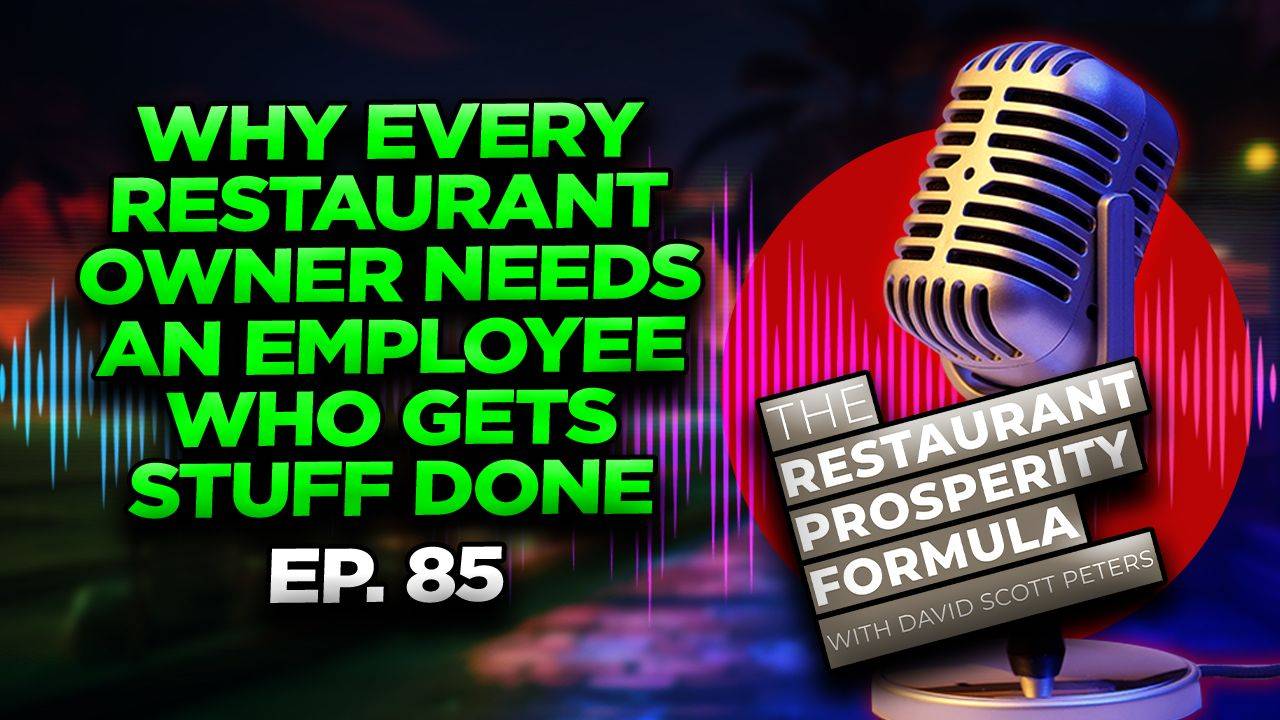
In this episode of my podcast, The Restaurant Prosperity Formula, I introduce you to Ciarra Adams. She has been in her family’s restaurant for the past eight years. Her parents purchased Super Smokers BBQ restaurant with a 20-year history of award-winning barbeque in the St. Louis area. Her parents joined my group coaching program to put them on the path to freedom from their restaurant and the financial freedom they deserve. Adams was the implementer, and she made sure the systems were followed and moved forward, even when her parents got distracted with other issues and challenges. While her parents and Adams have graduated from the coaching program, she is still the steady hand for her parents.
Adams shares her journey, the challenges faced by her family’s restaurant, and the transformative impact of the program. She also shares a unique perspective as a family member in the restaurant.
An implementer is someone who believes in the program, possesses a commitment to learning, is capable of starting and completing projects, and can hold others accountable.
Adams shares the backstory of her family’s restaurant, detailing her progression from dishwasher to eventually becoming a part of the ownership. The decision to join the program stemmed from the need for help, as Adams, now a mother, aimed to transition from daily involvement in the restaurant to higher-level business management. The interview touches on the challenges faced, the overwhelming nature of restaurant ownership, and the necessity of finding the right system for success.
Adams talks about her experience as an implementer in the coaching program, where she learned to delegate tasks, implement systems and build trust with her team. She emphasizes the importance of trusting the process, taking it one week at a time, and mastering each aspect before moving on to the next.
Adams also explains the significance of choosing the right implementor, highlighting the traits necessary for success. She underscores the importance of trust, leadership qualities and a shared passion for the restaurant’s success.
Adams’ journey as an implementor showcases the transformative impact of the restaurant transformation program. Listen to discover the key elements that contribute to the success of an implementor, emphasizing the importance of trust, leadership and a shared commitment to the restaurant’s prosperity.
Click the podcast player above to listen in, or you can watch the video on YouTube, click here to download the latest episode.
Read the full transcript.
Hey there restaurant pros. It’s David Scott Peters and welcome to episode 85 of the Restaurant Prosperity Formula I’ve been coaching restaurant owners since 2003. And the restaurant prosperity formula is based on what the most successful restaurant owners I’ve worked with do on a daily basis to achieve their success. The basic premise of the formula centers around achieving prosperity, freedom from your restaurant the financial freedom, you deserve to achieve prosperity, you have to follow a very specific formula made up of leadership systems training, accountability and taking action.
Now I want to tell you about our guest today. Ciara Adams has been in her family’s restaurant for the past eight years.
Her parents purchase Super Smokers BBQ restaurant with a 20 year history of award winning barbecue in the St. Louis area. Her parents Jeff and Michelle fitter, join my group coaching program to help them implement systems in their restaurant to put them on a path to freedom from the restaurant and the financial freedom they deserve.
As a part of my program, you must have an implementer someone who will learn with you but implement and actually do the work. Well Sierra was that person is that person and she kicked ass.
Listen in our conversation as Ciara shares her implementation journey, the challenges she faced and her triumphs, but also what a restaurant owner should look for in their implementer
I want to welcome Ciara Adams to the show today.
Ciara, I’m really glad you joined me today. I think that the perspective you’re going to bring in is going to change some people’s lives because most people again I talked to are restaurant owners versus being the implementer somebody who gets shit done.
But again, thank you so much for doing this.
Yeah, thanks for having me.
So, I brought you on is is you’re a part of our mastery plus group but you came through the restaurant transformation intensive group coaching program, from the beginning, as not only the implementer but a family member to your family’s restaurant.
Your father and mother came in as as the owners wanting to be a part of the program.
But as I always talk about it, any restaurant owner success my program is dependent on an implementer an implementer as somebody who believes in the concept believes in the ownership wants to be a part of something likes to learn is linear can start and finish a project is able to train others and with help from the owners hold people accountable and sometimes that works that it’s a family member. Often it doesn’t but it worked really well with you.
Talk about a little bit about before you started the program, where your restaurant was, what was going on in your family’s life as a family restaurant. And kind of the journey of why you as a family joined the program in the first place.
Yeah, so it basically started with us buying the restaurant.
I worked all the way from dishwasher to hooking the food pit it was family ran we had one restaurant and I was in there all the time with my dad finally got to a point where I started my family. I couldn’t be in the restaurant anymore.
I wanted to learn the higher end business owning a business business owner type stuff, which led to needing help and I was all for putting the right programs in place so that they didn’t need me and they didn’t rely on me because as a daughter. You feel like you have to be there to back it up and especially when you already work there.
So I was a firm believer of finding the right health, finding the right program, not even a program, just finding the right system for it to work.
And then that’s when we found you guys and it has been life changing.
Well it’s life changing because you did the work and that’s and that’s kind of the part of why I brought you on is all too often. I have restaurant owners who join the program and they don’t believe me in the discovery call that I won’t let you in without an implementer sometimes the implementer changes. You’ve seen people through the 30 weeks of going through the program some people change their implementer last the implementer things change should happen.
But the fact that matter is the most successful members it’s dependent on their implementer because restaurant owners are I call them ADHD restaurant owners they chase the shiny object squirrel next thing next thing like with your father, Jeff, you’d like to chase the new location, the new business the you know, what can we do? With the food truck like we do, and coming in on a daily basis doing the same thing over and over again can often well put them in a wreck or make owners like that just a little impatient with people because it’s like I’ve been doing this for so long. Why don’t you just do what I say to do?
Does that sound accurate? Yeah,
yeah. Just the bigger picture is to trust our process. Because we feel like we know what we’re doing but yes, from the lower end store everyday restaurant. level it’s Yeah, it is hard to get the concept and the trust that we have and hopefully they believe in,
talk a little bit about what your role was before you joined the program. You know, were you a manager or are you moving into an operations role? Were you just the daughter who picked up all the pieces? What was your role before the program
so payroll wise, I was general manager transitioning into operations. I guess I was everything. I had picked up shifts. Yes, I did. Pick up shifts. I tried to pick up some stuff and then I’m surgery and then I got pregnant and then I was still picking up shifts and was getting in trouble because I was picking up shifts that I shouldn’t have been. So yes, I was doing all of the in store front of house stuff along with payrolls of schedule. Just the daughter that picked all this stuff up.
Was that easy? How many hours did you put it in a week that it did tear away from the time with your husband and your family? Like what what? What was the effect on you personally?
Pretty it was pretty it was pretty hard effect. I struggled internally and with my husband and it just it took a toll.
And that’s the tough part about the restaurant business man when we when we donate our lives to it. When we subscribe to the old school way I was brought up in the restaurant business the more hours you put in, the harder you work, the more valuable you are, how and how that’s not a truth. It’s actually a fallacy. And the cost is high especially family and so on. We often tell ourselves, we’re doing this for our family and really we’re not like we need to be there. And what was interesting is when we met you came in as as the implementer you were pregnant, you were going to have a baby was imminent within the program like you weren’t going to make it through the whole program. So it was this extra pressure to like, not only implement the systems but you had to have them in place because you were going to take some time off. Talk about that pressure and what you were hoping the program was going to do before you even knew.
So the pressure was extremely high because I wasn’t in the restaurant and I was trying to try I was trying to learn it myself.
As I was learning it. I was realizing that it’s stuff, the sheets and the work that needed to be done in the restaurant. It’s very difficult to do the sheets when you’re not actually in the restaurant.
So training somebody to do that. short staffed, etc or however you want to look at it.
It’s very overwhelming to learn it yourself for any questions you might do when you finally give it away to somebody right or trust that they’re doing it right.
Something was wrong in differently and you didn’t know what it was but it was very overwhelming to get it all figured out yourself before you then gave it to somebody else which then caused a little more stress to me personally because I just wouldn’t give them up. I just learned that I did that correctly.
And then I
I actually was on maternity leave doing the sheets, like I just could not I could not trust anybody that made sure that they were doing the correct things. The sheets were doing the correct things based on what they’re doing in the store. I just I could not give it up.
Might be a trait I’ve learned from my father I got from my father but I did not give it up because I just had faith that these these sheets will do the right thing if the right person is doing it.
And the right numbers are going into it. With limited access to the people that are allowed in the big sheet, the big budget the everything that ties into it, which it just it was very overwhelming. It was a very overwhelming process.
So talk about the first kind of as you dive in what was the first change you made that you said, Hey, these systems can actually work and I can get them done.
So that’s change I think I just learned them. I tried to figure them out. I tried to ask questions to see if anybody would learn how to do them. I took one sheet at a time learned it and then build from it and then try to divvy out the sheets and me still control the ones that I still had not in the restaurant. And then that kind of made a pattern of okay, the invoice tracker can be done without me as long as they’re doing it correctly. And then I can fill out the checkbook Guardian with the invoice numbers in there as long as they’re filling that out. So the trust system and the giving an divvying out the work also helped within the training process.
so that they actually learned how to train and do the sheets as I was reading. So because
you’re kind of saying, bring up that you lived two lives, there were certain systems you’re willing to delegate that you’re willing to let other people do and double check that they were doing right. Then there were certain systems that you said, I’m the only one that could do it, which was following the same footsteps of your father. Like, I’ve got to get it done. I know what nobody else can do this and it’s just a test. What was the difference between those two systems or did you just kind of make it up in your brain like this? I think I’m the only one could do this. Somebody else can do was there. Was there delineation of difficulty or what information you were gathering or was it just kind of a gut check that I can’t give it all away? So these I’ve got to be that important. I’ve got to keep the
Yeah, the
reason of me I think it was a gut thing. I I knew the certain stuff that goes into the sheets.
For example, if I only had access to the budget sheet for labor, nobody else would find that so they’re gonna spend more time texting me calling me asking me not even doing that. Because they can’t they can’t parse the rest of the sheet without the number. So I got that. I just said I will do it. I will continue to do it. They didn’t know the forecasted sales because I only did the sales forecast.
Now, they could have done that. But I was still stuck on making sure they were doing the other sheets correctly. And I was like, I won’t do it.
So I found myself just doing them all and they were only doing like one or two, because I just it was easier for me to just do it knowing that I was trained and I knew exactly how to do it, where I knew to find information. So it was just a gut. I know how to do it. I can get it done in a timely manner.
What’s interesting
is when restaurant owners come in, like your father or mother come in and say, Okay, we want to make change. We were saying we need to supplement or sometimes the process of what you’ve just demonstrated is what happens to a lot of people there’s, it’s here’s your dad, Jeff, who’s having a stressful life trying to hurt himself, and all he does is takes his stressful life and make it your life.
Right because if you haven’t learned to delegate, if you haven’t learned to train others trust and verify, then all you do is replace one person’s stress with another person’s stress. He’s not doing it now. But you are and what was it that made you finally say, I’ve got to break free from this I got to trust. I’m gonna verify but I’m gonna train them and make sure they can do these other systems. We’ve accepted the budget Nobody gets to touch that except for upper management, and so on. What was it like? Like, what was that clicking? Like? I can’t continue this
is my personal life. Yeah, it was definitely the emotional. It was my personal life.
And so something had to give and that was the pushing needed to make the change. And it works, right. Like when you’re willing to give it up. If you’re willing to train someone, if you’re willing to coach them, be over the shoulder, ensure they get it done. That’s the accountability piece.
There are just tasks they are not you are not God’s gift to the restaurant, you may know more than most people and you may be the best at it, but other people can do the tasks. And that’s the lesson. It just took a two by four right? Some are going bang, you’ve got to make a change.
But you made with that said, let’s talk about let’s back up a little bit.
You were very successful in getting the systems put in place, like I was talking about, everybody’s gonna fall behind. It’s a 24 weeks of lessons 30 weeks of your coaching program. And out of that I’m trying to most people that week 19 Because it’s got all the basic pieces in place that we’re operating on a budget we’re proactively managing the business, we’re holding people accountable. We’ve got managers, we’ve got time off. We’ve got all the foundational pieces in place.
But you had to do it on steroids because you had it was imminent. You’re gonna have a baby.
What was it that kept you on pace? Was it difficult? Was it just carving out the time? How did you stay on things because a lot of implementers dealt
a lot of that had to do with not being physically in a restaurant where I was not distracted. Sales is that I can get I can go to the restaurant and work there today. And I don’t get anything done because I end up running food or I just am not doing my job.
So a lot of that had to do with me. Having to talk to my parents letting them know that I love my job title does not have to change but something has to change in my schedule so that I can focus on this in order for me to implement it for it to be successful in Russia. So then I personally on the schedule side made sure that every time we had that call every Tuesday, I had my homework done I had the sheet at least saved and unsaved on my computer and at least a template on it and I knew exactly what it was. Otherwise I didn’t know what then I didn’t know what you’re talking about a phone call because I don’t know that she does. So I made sure that the sheet was at least I know where she was at least I’ve watched videos and the lessons before our call so the Tuesday call really held me accountable on the week before to get all of that lesson done.
And then I did finally get caught up enough to where I was a few weeks ahead and and know exactly what was happening because each sheet built from each other and that made it way easier to be quick about it.
That’s crazy part about how I’ve designed the program and it’s literally I always tell people not to trust the process. Usually there’s one thing and you’re gonna this one thing, it is one thing teleca seminars, I used to use a magic coloring book, and I flip it open all the pages are blank and I say okay, I’m gonna teach all these things that we can use structure. You just put your finger to different ways that I spread the book open and now we had one black line and what we’re gonna call it I’m gonna say it eventually when you say the process, everything comes clear and I’ll send it with my finger and open up with me with a colored paper.
And that’s kind of across so I just have to trust the process. Just learn the one thing Don’t worry about the thing that’s in week 24. Just week one, just worry about week two.
Did that help you get through the program? Did it make it less overwhelming or how did that work for you? Oh,
absolutely. I didn’t I did not ever look at new lessons and look at new sheets. When my my dad or my mom would ask me if I knew about a sheet and I haven’t heard about it before I told him I didn’t I don’t know talking about and I I know I’m not supposed to know talking about because I’m not an attorney currently.
So let me master and let me learn this first task and the sheet before I go to that one because I live in a world if I don’t know No way now that they all tied together that I will be no help if I only do that one if I even look at that one I’ll be way confused.
And I don’t even know when I’ll be overwhelmed if I didn’t even do this you know I just did not even look at the next week the next week
and I think that summarizes why it’s one week at a time it’s master this first make it a part of your daily routine. Make it because we have this progress make so you might work on this at the Star Trek or you got another week of work on the DSR tracker before anything brand new shows up because you’ve got to make it a part of the routine. You got to feel that question.
So now let’s tie the questions about the accountability. What was it like to be on the group coaching calls, like every Tuesday for two hours or with restaurant owners in week one to week 30 You’ve got implementers from week one to week 30 And sometimes those are pop up in the middle.
What were group coaching calls like and then what kind of support did that provide you
support that I never knew existed but incredibly grateful for I had no idea that when you’re in your own restaurant, you feel like your world is sometimes horrible sometimes right?
But you’re in your own little world when you hear them in not only the same situation but the exact same lifestyle, even when they’re talking about their wins and the kids and they’re so humans and they’re living the exact same life as you why it’s crazy. I never would have expected to relate to more more people than I ever have.
But also very humbling. It’s my dad likes to speak up a lot and talk and there’s a lot of things that he’s that I’ve watched him learn based on these these other people and these other mentors and these other owners that I would have never been i i listen to him I we’re both not born and raised in restaurants so this is seven years of us just being the restaurant there’s these people in these groups that have been in there for their wives and they’re taken over the family businesses and it’s it’s crazy to hear the other other stories and advice and and help from from the group.
is amazing because nobody understands running a restaurant other than restaurant people like your friends go oh, I have this issue with employees managers do this. You’re like you’re looking across it like you don’t get it like you’d like a long way. I’m not serving tables right? All these people on the call they walk in the same footsteps that you do they have the same challenges and at different points in times in their their success or challenges in their careers or business business like but I’m not the only one with a solution. You are you help other people, other people help you and it is magical because they’re not competitors hoping you die. They are literally willing to take the shirt off the back and help you and it doesn’t matter.
Did you ever feel like I’m an implementer? So I’m not an owner. So I’m any lesser than a person in that group. I could probably say no. Would you agree with that?
Yeah, no, no, no. I feel I felt and I still felt appreciated. Any questions? Any any concerns? I have. I’m
talking a little bit about it. If the journey went on, you saw and now you’re upset. You’re I’m trying to think of all the people that were in your timeframe. You had several people who had implementers that did do shit like nothing and those owners were always talking about how far behind they were? Was there a personality trait or something that was missing in their implementers that you could say you don’t recall people’s names out with? No, no, but it’s like what was it about either the owner not holding them accountable or giving them the support they need? Or the implementer maybe just not being motivated to get it done or misunderstanding what needs to happen. What you think some of the common challenges were for those people who just didn’t get things done?
I personally think that it comes from the owner explaining exactly what this program is exactly what the point of this program is, and that they’re picking the correct person that has passed the same part and same motivation as as an owner does because it is that much work. It’s it’s only like work on a on an install basis. So I personally believe that it’s the owner passion is just not they might have it it but they don’t have a good version of telling you that and I think that’s where people get lost on. Well, my owner just want me to do the sheets and learn the sheets and then divvy them up. And I don’t know if that’s how some people show it but as an employee in the restaurant that has noticed that worked with the co workers and that’s the kind of attitude some owners have that that they’re gonna run with it they’re gonna be like, Oh, well, you just give me another task with no pay. And that’s just who they chose. It’s not a good fit once they know who who they chose. Another owner is not explaining it well.
So let’s come to one quick communication. But the other is the why why the hell are we doing this? And you better choose the person who’s the right culture fit because we talked about the group coaching calls I’m I can teach somebody do any of these systems, but I can’t fix if you have a bad attitude. And that’s not right. I have a bad day. We all have bad days.
But if I’ve got a bad attitude, and I’m consistently like why did we do this? That doesn’t make sense. I don’t have time like all the excuses of why we to get things done that probably not the right fit.
What is it that you think made you such a good implementer? There’s a reason why I brought you on like because you checked f what is it about you what do I assess you correctly when I say generally what an implementer looks like when I walk through the step by step you know from point A to point B straight line getting things done believing things want to learn all those things? Or is there something else? What makes you what made you a good employee?
I personally took it upon myself to be an example of the restaurant. I don’t I walk around as an employee, I don’t walk around there’s some people that don’t even know that I’m the owner daughter.
I show up every day for work. I I work and people know that I show my face I in the restaurant learning new sheets, specifically learning the sheets while talking to my general manager that were there at the time.
And she’s seen me do the sheets. She’s seen the effort I’m putting into the sheets that they actually mean something and they took that to heart or her and our other manager took that to heart which led to them, appreciating it, respecting it and at least getting the sheets done that I didn’t know and for showing my face and being a better leader to my co workers had had a great impact on the respect that I got back towards my my employment as a whole and coming in and working.
I mean, I would sit at the table and do my sheets and then get up and help and they would yell at me and say sit back down. You shouldn’t be working for me. Like I just I chose that life. But I still want to do and that’s I feel like they got a good understanding of that. You
just summarize the very first and most important piece of the Restaurant Prosperity Formula that’s becoming the leader your restaurant needs.
And I think that that is that is a big thing is when we’re choosing a person who’s the implementer they’re going to be a good leader. They don’t have to be the best at the task isn’t good. They’ve got to be trustworthy, they’ve got to they’ve got to you’ve got to have people believe in you and know that you’ve got their back. And that doesn’t mean you got to you know, bust everybody’s tables and you gotta do all the things you’ve got to be involved.
But I think that’s if I summarize why you were successful is you gain their trust. They knew that you had their back and in turn they were gonna have your back. So leadership is a is a key thing. That’s not right. Absolutely.
So what would you tell somebody who’s looking to pick an implementer? They’re like, David, I’m, I’m ready to come to your program. I don’t know who you know, I often hear I don’t have anybody with the implementer and like, you know, anybody, like nobody on your team, and some of that’s the frustration of you don’t have systems you have lack of management. People kind of goof off. They don’t give their very best and somewhere in there is a diamond in the rough, rough. But what would you say to anybody who’s looking to find your implement if they’re on your team right now? What does that person look like to you?
To me, it’s a person that you trust when you are not physically in the restaurant and you trust with your safe and the simple things, the keys, the the equipment, the the money, the daily operations. If you are not physically in the restaurant, and you don’t even have contact information like they can’t reach you. You trust this person to run this restaurant smoothly, effectively and safely.
And that just shows you right there that they have trust in you. They respect you as an owner, they respect your things and they respect your job and they love working for you genuinely. That is that is going to be someone that’s not just you wake up and I have to work today that’s not that’s not the represent that’s all I have I can’t put my job in your paycheck not your right person
so really doesn’t matter think like they don’t have to be the best manager don’t have to be manager doesn’t miss server best cook whatever. They’ve got to trust this huge leadership. You know, Simon Simon talks about it so you walk in any any any business you go, who’s the person who’s got your back for all gonna point to the same person that’s the person you don’t wanna get rid of. It’s kind of ugly. They’re not always the best at what they do. But would you agree that the systems that I teach you call sheets because they’re Google sheets that we literally could train anybody to do them if they were willing to learn like they’re not difficult it is that accurate? So it really is actually, its Attitude Trust its leadership looking for that person, but it’s not like Man, you’ve got to be this culinary genius or lifelong hospitality person. You just got to be willing to learn to do it. I mean, it’s that simple.
Looking at other implementers that went to the program, we focused on those that didn’t do well. Those that also kicked ass like you. What did you see in them? Was there anything that stood out and said, Man, I’d like to be like that or I identify with that. And you know, you knew right away when you’re on calls that this was a rockstar this was somebody like you that was gonna get this shit done.
A lot of them that I related to they they had the same attitude as me. They also were very close with their owner. They were they were not related, but they they have the attitude and the drive as the owner and that that already shows that they are going to be rockstars they are their general manager or their their, their catering manager or somebody that is at the level mindset of the owner.
Not title wise not role wise, but they have the mindset of the owner or management that has the respect for the for their restaurant to make the systems go in place. Cool and that that was the best life
has changed for you during the time that we spent together in the program to after the fact from heaven. You know, a beautiful baby to up. We had a challenges one location and bad location had to let it go. Purchased a whole nother restaurant. There’s still lots and lots going on the trucks that are going out for the events and what have you.
There’s still a lot of moving parts.
What is life like for you now? You’re still the implementer for all intents and purposes, the role of implementer No, never goes away. You’re the glue to make sure all the stuff gets done. But what’s life life like for you personally now?
I have in my house my husband have helped me divide and conquer my life, my personal life and my business life.
The challenges of living so close to this new restaurant is harder now but again we’ve made a strict like that this is it when I when I go home this is it. I I will answer you tomorrow if it’s not an emergency. So the life the lifestyle change of two restaurants and the type of restaurant we purchase being open so late.
The lifestyle change has been has been the hardest but best challenge that we’ve had to do.
But we have I’d say just strike me that’s what being in restaurants like dang it.
That’s all good. It’s okay.
Well, the train of thought where you’re going was is is you created boundaries. You allowed I’m going to summarize, like its boundaries.
And I think that is probably the biggest lesson any restaurant owner or implementer learns in the program is you’re not the one that does everything you got to you got to have a life outside and and that’s to pull you back as she walked behind you and came back and you lost train is the boundary side right is having a life is is more important than answering every little thing that you could train others to get the answer themselves, or if it’s not going to be urgent. They don’t need an answer right now. Right, right.
Especially, especially my parents don’t need an answer at 10 o’clock at night, or an email that didn’t get answered or something that just didn’t answer but they’re up crazy night late trying to find the answer. I just I and they know that I’ve we’ve had a talk that is one thing that had to stop by they can answer or they can send all the questions they got.
I will answer you in the morning. In the middle of dinner on bathtime I mean it’s it’s it’s hard. It’s very hard. It’s it’s took a lot of adjusting to get to get to this point. But I we’ve got to all four of us and my sister working for us part time too. It takes a lot of us to catch ourselves to stop talking about work at dinner it’s when we get together it’s for family it’s not for restaurants off are both of our husbands have been very good at making boundaries for us too because we get caught up and that’s the only time and so dad that was or that day or just it’s the boundaries are so important and you don’t realize that when all four of you are working at the restaurant. So
I think it’s a greater challenge for you as a family business. You’ve been in that role.
Whereas if I’m a non related family member, right or the family member of the restaurant, but not a biological family member, it’s much easier to create those boundaries. Because it’s one thing to say I’m going to text my daughter at 10 o’clock at night it’s another text my daughter and go did you call the plumber? You know, it’s like, wait a second, dude. This is my top and it’s imperative that it’s done.
Now, are there other Is there anything I didn’t cover or anything? I didn’t ask you that you wish I asked you that would help a restaurant owner identify and ensure that their implementer actually was successful because their success on the program is directly tied to the implemented so anything you know piece of advice you’d give
i the piece of advice is I would not jump into somebody that has been here for a long time but they’re looking for something more in the restaurant and you’re like oh this will be great. Like it’s it’s definitely somebody to look for more than a role in your restaurant. It’s it’s a role in your business that needs to be successful.
So I would say a piece of advice is trust the person with your heart with your loved ones in order to be successful. I
appreciate that.
I appreciate you. I’m thrilled that I get to see you because you guys are part of the mastery plus group so I get to see you every three times a year at minimum I get to see on a monthly basis on those group coaching calls.
I look forward to seeing your success as you continue on, and I really want to thank you for sharing because I think as restaurant owners one of the biggest questions I get asked is who’s my implementer How do I find him? You know, like I don’t have somebody and and this helps kind of shine a light on what we’re looking for because you are the person I’d look for appreciate you see
i You are welcome. I appreciate you.
Hey, that was an awesome episode. I want to thank you for taking the time to take action on building a better, more prosperous restaurant.
Before you go.
I want to give you these three thoughts. One by combining leadership and taking action with systems and training being checked by accountability. You are on your way to creating prosperity for you and your restaurant, too. I have something I need from you. Please leave a review on Apple podcast Spotify or wherever you happen to listen to podcast by leaving us a review other restaurant pros seeking out this information are able to find it. I read the reviews and hearing how this information has benefited you does wonders for me. And three, if you find any of the discussions helpful share them, the more restaurant pros who have access to them, the better we become as an industry.
For more restaurant resources or to get in contact with me. Connect with me at David Scott peters.com. Be passionate about what you’re doing. Be persistent, but more importantly become better and help everyone around you become better and your restaurant is going to kick some ass.