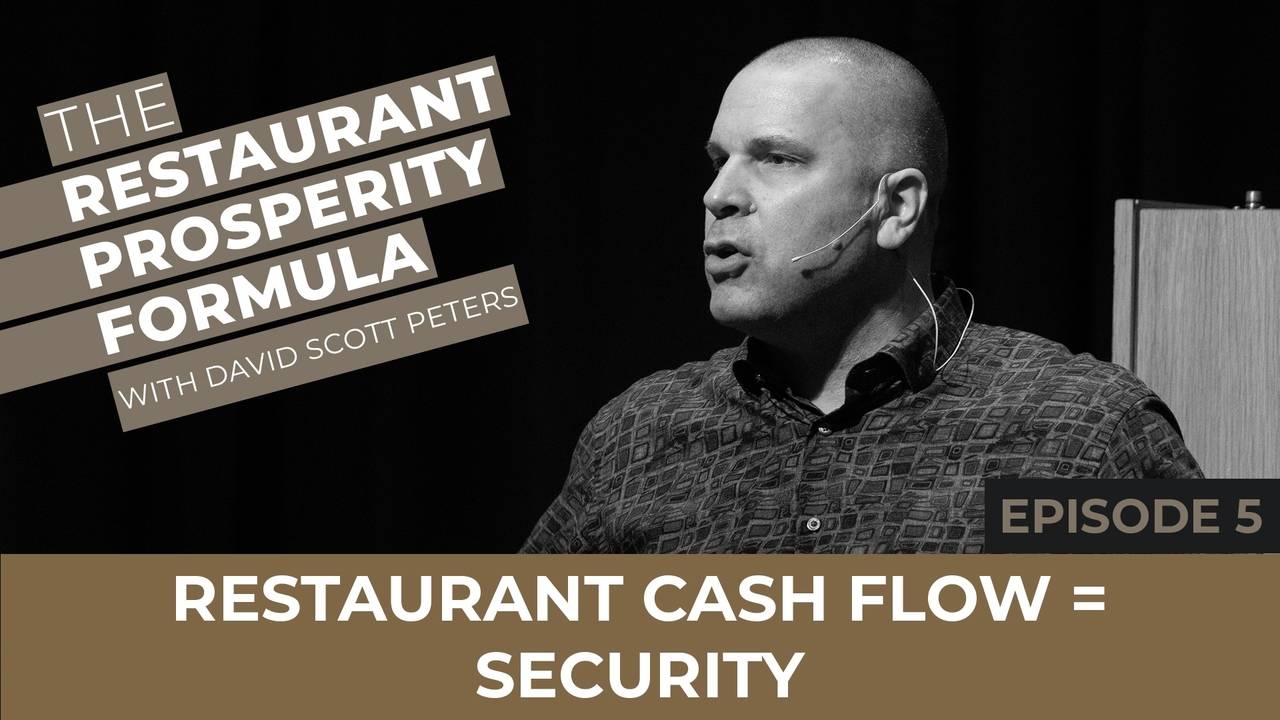
Restaurant accounting requires a special touch and there is no one I recommend more to independent restaurant owners than Anne Gannon, CPA.
In this latest episode of The Restaurant Prosperity Formula podcast, Anne and I talk about many important topics, including:
- Why it’s probably worth keeping your restaurant’s doors open right now, even if you’re losing money
- What financial numbers to know and pay attention to for restaurants
- Cash flow budgets and their benefits
- Why you have to take care of yourself as the owner
- What to look for in an accounting firm as a restaurant owner
After working in a big-five accounting firm in Boston, Anne was motivated to create a more efficient system for monthly accounting and tax services. She saw too many small businesses spend a year without accurate numbers or support only to end up during tax season paying big bucks to figure out their tax obligation and where they really stood financially – 18 months removed from what actually happened. She wanted to take a more proactive approach and work one on one with her restaurant clients every month – sometimes weekly – to allow them to be proactive in their own businesses. So she opened her company, The Largo Group
Anne disrupted the CPA paradigm when she opened her accounting firm. She charges her clients a monthly fee and works one on one with them throughout the year to keep their monthly accounting up to date while keeping their accounting costs lower.
“When I went out on my own, the goal was to not be a traditional accountant, to do it the way we wanted to do it. And that’s really been our mission: to break down accounting into not just the annual tax return but to have constant communication between the business owner and the CPA. The numbers in accounting are the language of business, so you need good numbers to really understand your business. And that’s the goal of The Largo Group,” said Gannon.
During our discussion, Anne also talks about how things have been different in the COVID-19 pandemic.
“Everyone was so focused on revenue because we were in a really good economy. So, if a restaurant owner was hitting a million dollars, they wanted to get to 1.5 million, and then once they were at 1.5 million, they wanted another location. Restaurant owners weren’t focused on saving, only on getting bigger. Then COVID hit,” said Gannon.
Anybody who went through the last several months knows what the end of March was like. Hopefully you’ve stabilized with your local government’s regulations and your customers are comfortable with what you’re able to offer. You’re not back to pre-COVID sales, but many restaurants have at least three weeks of consistent revenue. These can be numbers you can work with to project and build efficiencies.
This is a great episode to listen to as an independent restaurant owner because the truth of matter is a cash flow budget doesn’t stop you from making an entrepreneurial decision. If you sit there and say, I want to add this piece of equipment because I think it will increase my revenue, would increase my efficiencies, or you still want control of your business, the cash flow budget shouldn’t be scary. They are more like a crystal ball to help you plan. You can project out, even down to repairs. You can plan for things like repairs. When you know what cash you’ll have in the bank, emergencies aren’t so scary.
Two more hot takes from the episode
- For most entrepreneurs, your business is your largest asset. Even in COVID, you have this business that has historical information that has a value to someone. You can’t look at the direct cash flow value right now, but look at it in business valuation terms. If someone walked in and bought your restaurant today, they’re buying time. If they buy your restaurant vs. start one from scratch down the street, they’re saving themselves two years. If they didn’t have to build the building and introduce themselves to the community, there is value in that. Even without being cash flow positive, there’s value. That gets forgotten.
- The other thing to think about is if you turn the keys in and walk away, what needs to be paid for in your lifestyle that is not getting paid now. Your business might not be cash flow positive, but it’s been paying your car, your insurance, your cell phone. That could add up to $3,000 per month. If you turn the keys in, how are you going to earn $3,000 per month? It’s pretty sage to say for many that 2020 is a wash. It’s not fun. Nobody’s gonna want to look at this. But if you have to pay $30,000 in 2020, but in 2021 your business could potentially be worth $150,000 based on the valuation of your sales and the historical information of your location, that is an asset you should maintain.
To get more restaurant accounting tips to build cash flow and security, listen to this episode of the podcast. Anne and I talk about:
- Restaurant cash flow
- Cash flow budget
- Restaurant chart of accounts
- COVID-19 plan for restaurant recovery
Read the full transcript.
Hey there, restaurant pros. It’s David Scott Peters, and welcome to episode 5 of the Restaurant Prosperity Formula. I’ve been coaching restaurant owners since 2003, and the Restaurant Prosperity Formula is based on what the most successful restaurant owners I’ve worked with do on a daily basis to achieve their success. The basic premise of the formula centers around achieving prosperity, freedom from your restaurant, and the financial freedom you deserve. To achieve prosperity, you have to follow a very specific formula made-up of leadership, systems, training, accountability, and taking action. Today’s topic centers around the principal foundation of knowing your numbers. Now I want to tell you about our guest today, Anne Gannon, founder of the Largo Group, a restaurant accounting firm.
Anne started the business to specialize in restaurant accounting because she saw too many accounting firms taking on small business owners as clients, but not providing them with the support and guidance to help them grow their businesses. Her mission is to transform the way accounting works with restaurant owners. We had a really great conversation. Ann reviewed what the most important numbers restaurant owners should be paying attention to, especially now during the COVID-19 pandemic. She shared how cash flow budgets are critical to your success and the importance of verifying your numbers so you can trust them above all else. I want to welcome Ann Gannon to the show today. But first, a word from our sponsor.
This episode is being brought to you by Repeat Returns. If you’re a restaurant owner of a medium to high volume independent restaurant, multi-unit or franchise operator, and you’re looking for a proven and realistic solution to attract, grow and retain customers, then you need to visit Repeat Returns. Repeat Returns is a modern marketing platform created by a restaurant owner for restaurant owners. It studies each customer’s habits and patterns, predicts the most profitable outcome for your restaurant every single day, and deploys the marketing to make that happen. You’ll never lift a finger. To see if Repeat Returns is right for you, visit repeatreturns.com forward slash DSP. Hey Anne, I want to thank you so much for joining me on the Restaurant Prosperity Formula. It’s really great to see you.
Thank you so much. I’m really excited to be a part of the podcast. So thank you very much.
I hope so because we do an awful lot together. I want everybody to know, full disclosure, Anne and I have done a cash flow webinar together. It started as, how many weeks were you supposed to do?
We were supposed to do I think 2 at the beginning and then we went to four.
Two, four, and then it went to 16. Like 8. Something like that. Now I’ve not participated in every single week, but probably half of them. And one of the things that you and I have done is COVID hit and we want to do everything we could to help restaurant owners. Now let’s kind of go backwards. Full disclosure, Anne and I have been working together, gosh, now for three years. Started in my last company where I met her as a speaker and thought, hey, you’re a restaurant accountant and realize that she really did know her stuff and did incredible things. And I got about half my members of my old company to work with her. Now my new company is DavidScottPeters.com, creator of the Restaurant Prosperity Formula. I’m on the same path that I know that if somebody wanted to know their numbers, They need to have a good accountant. And man, I’m gonna tell you, Anne’s probably among the best. And we’ll go into some reasons why I think that. So do know that as I’m talking to Anne, we’re friends, we know each other, and most of my members work with her. And so, and do me a favor, tell everybody just a little bit about how you got into accounting, because really it’s kind of been a long road for.
You. No, so I actually started off thinking I would be a professional golfer. That didn’t work. So then I went back to school for accounting, worked in a big firm, and then very quickly realized that in a big firm, the business owner, entrepreneur, it just doesn’t really work because there’s a lot of red tape. And by the time you get to doing the tax return, you’re really not able to provide any useful information because you’re 18 months removed from when that actually happened. So I decided to go out on my own and that’s where the Lager Group came. And really from the very beginning, our goal was to be different. And I was always kind of told in the big firm that I wasn’t a traditional accountant. So the goal was to not be a traditional accounting firm, to do it the way we wanted to do it. And that’s really been our mission is to break down accounting into not just the annual tax return, but now we’re to the point we do it weekly so that there is a constant communication between the business owner and the CPA. So we all know what’s going on, right? The numbers are, accounting is the language of business. So you need good numbers to really understand your business. And that’s our goal.
And that’s more important now than ever. I mean, you and I did the things on COVID. I mean, it’s something all of us have to understand that COVID, COVID, COVID, there is no post COVID at this point in time. We’re in COVID. There was pre COVID and you and I have had discussions about how restaurant operators pre COVID were making mistakes and maybe it wasn’t as urgent for them to make a change. But COVID changed that. Talk a little bit about why it’s even more important to change what you’ve done because you see people’s numbers. You know their profitability, you know their tax liability, you know their liabilities when it comes to PPE or EDIL money and things like that. So talk, why is it really changed? What’s changed?
I think pre-COVID, I joke that we were doing cash flow planning pre-COVID when nobody wanted to get on the phone. It was like, oh, yeah, I’ll deal with that. Yeah, whatever. Because everyone was so focused on revenue growth. We were in a really good economy. So if you were hitting a million, you wanted to get to 1.5. If you were at 1.5, you wanted another location. Like everyone was just, and that wasn’t anything wrong, but that was where the mentality was. And efficiencies were good and like, that’s great. I could save a little bit, but I’m okay. And I just want to get bigger. And then COVID hit. And I think anybody who went through the last few months knows what the end of March felt like, right? Because you have all these bills you can’t pay because people just all of a sudden stop coming into your door and your business is half of what it was, 1/3 of what it was. And all of a sudden cash flow, is important and it’s a totally different ballgame. And I think what a lot of people have had to do in the last four months is this reset of what is my business at its core, what can it be going forward and how do I keep it from bleeding? And so cash flow is like where we start. But what’s funny that we’re seeing now is as you get into kind of more stabilized, right, not always back, not always what it was, but at least three weeks of consistent revenue, which is kind of where we start. We’re like, all right, the last three weeks were the same. That’s a win, right? But now you’re kind of like, hey, I’m actually doing a better labor percentage than I did before, or hey, I’m actually doing better cost of goods than I did before. Maybe not with the same sales, so obviously not maybe the same bottom line, but It’s interesting to see that people have to be efficient now and they have to pay attention to these margins now. And so, I think that’s where the core going forward is. Let’s keep these good numbers and this good process and the systems and all of what you teach especially. And then when you get back to the same sales, It’s a home run, right? It’s even better than it was.
Well, a lot of that happens, because not everybody you work with, I work with. Vice versa, it seems to be the other way around, right? If they work with me, they’re somehow finding Anne Gannon. Why? Because I put my name on Anne, because what you do is extremely important. Because for me, I often tell people, if you had $1 to spend, and I’ve told this to you, and I tell people in sales calls all the time, if you have $1 to spend, Anne costs a dollar, and I cost a dollar, depending on where you are in your I’m going to tell you to spend the dollar worth and first. Why? Because without good numbers, we can’t do these systems. We can’t possibly know where we were or where we need to go. We need good numbers. They’re incredibly important. Now, a lot of restaurants, as you alluded to, didn’t pay attention to the numbers before. Like most CPAs, most bookkeepers get people their P&Ls 30, 60, 90 days. You and I both have seen worse, right, days later. And that’s a rear view mirror. Now you and I come from the cloth, cut from the same cloth of proactively managing your business, starting with a budget. Now we attack it two different ways. I talk about an annual budget, you talk about a cash flow budget. And if there’s one thing COVID has done is it has magnified the need for understanding your cash flow. So when we talk about some of the numbers you need to know, talk a little bit about the cash flow process and why you go out of your way to actually meet with each one of your clients on a weekly basis, especially now, but always, but especially now with COVID. What is cash flow? Why is that number so important?
I think a couple of things. First of all, I really think focusing on cash flow can catch and make sure you have controls, right? Because I always joke that, in the past, it’s like you show a P&L to someone and they say, oh, well, I think your numbers are wrong. There’s no way I made 5 grand. Well, my number could be wrong on my P&L if not all the cash got deposited into the bank or stuff goes out the back door. Like there’s a lot of efficiencies there or even control, things that aren’t good that could go on in our restaurant and we wouldn’t see it on our P&L. So a cash flow from an accounting standpoint, and that’s why even pre-COVID, this is always something we would do internally is if I can check your cash flow and say, well, your cash went up by 4 grand and your P&L shows 5 grand, All right, I think we’re good, right? I think that we’ve captured everything. But now with cash flow, you have this other thing of, well, your revenue might be there for the last 30 days, your net income might be there for the last 30 days, but you have no cash, but at least understanding, well, that’s okay because you’re paying down the stuff from five months ago, or there’s a plan of attack for what you owe or different debt that was still there, but that’s where a cash flow picture can show everything that’s in your business. And then as a peace of mind to the owner, one thing that we’re really working on with cash flow now with a lot of, especially the David people, is to say, okay, right, as of middle of July, it’s stabilized. Let’s start a 12 week cash flow budget and say, I’m going to watch my bottom line for the next 12 weeks. So if I’ve earned $1,000 a week, at the end of 12 weeks, I’m going to put that in a separate savings account. And that’s your money as the owner. Because the thing with COVID is it’ll never feel like we have enough cash. I mean, you’d be amazed at the conversations I have with people who feel like they don’t have enough. They got a lot of money in the bank, right? I mean, pre-COVID, you guys would have been going on vacations and be like, yeah, I’ll see you later, you know? But it’s different. You don’t never feel like enough because in one day, your businesses were gone and I get that. So that’s where like a cash flow plan moving forward should also be, hey, that $12,000 that I earned in the last four weeks, that’s mine as the owner. Like I’m going to put it here and not just keep it in this commingled mess because if stuff comes back, you as the owner, you do have profits.
Well, I think the other part is, and you and I talked about this, you’re the eternal optimist. I’m this guarded pessimist. I always want people to be better, but I look at it and go, what are the struggles we’re facing? And COVID came out in the first two weeks. I predicted 25% of all independents were going to be closed because of cash flow, because they didn’t, they’re running just on cash flow. Sales have to come into pay the bills that I accrued from last week. The food I just bought, the booze I just bought, the labor I just had scheduled. And the truth is, most people were depleting their revenues and were making mistakes in and out of their business, but they were making enough to keep paying their bills. And I think that what COVID did was shine a light on you have to run a good business. You can’t just spend money and hope that cash flow covers it because there are things that come out of nowhere like a COVID. And this has really rocked our world. In fact, I read an article on Restaurant Business Magazine that said 33% of restaurants said they’re not going to make it independent restaurants through October. And so that’s amazing. That is just our industry is in flames. But the truth of the matter is, one of the things that you do when you work with them on a cash flow basis, forget about budget, but cash flow basis. They truly understand what numbers they need. And often I think, tell me if I’m wrong, that you see a lot of their stress level lower because they have a plan. Even if it’s I’ve got to push a bill off 2 months, they can literally see when the revenue is coming in and how they can attack, have a plan to survive or even thrive in this crazy time. Is that correct?
Because I think the one thing that, as a business owner, it is incredibly stressful, especially for a restaurant owner, because you have so many ins and outs. you have when the credit cards hit, you have when payroll hits, you have when rent hits. I mean, it just, I mean, there’s a ton that goes in and out of your bank account. So I think one thing that we try to do is predict what the cash balance will be in your bank account weekly. So at least as the owner, if I tell you, hey, next Monday, expect to see 20 grand in your bank account. That’s part of our plan. When you log in on Monday and you see it’s 22, you’re like, look at that. But it has a benchmark, right? It means something. Otherwise, you log in and you see 20, and especially now with COVID, it’s a panic. Well, you know, my payroll 2 weeks from now is going to be 20, so I have no money. And all of a sudden, it can be this huge mental thing that you carry with you every day, but it’s a revolving door. There’s always a bill that has to be paid. So that’s where having that benchmark for the cash balance, like you said, even if it’s not what you want it to be, at least it’s like, okay, our decision is it’s 20. So we’re not going to pay these three bills because we don’t want it to get to 15. And because we know this is coming, then we’ll revisit it next week and we’ll have a revised ban next week.
And even if you’re doing well, I mean, I was just on a call today with a restaurant that before COVID was doing a $2.5 million in sales. As of the middle of August, they’re already at 1.1. So, you know, maybe they’re down 30%, which is unbelievable. Unbelievable. that kind of volume. the truth of the matter is, even for somebody like them, I was hit a little bit. Often we kind of see the retraction in sales and think, I’ve got to hold on to my cash. When the truth of the matter is, a cash flow budget doesn’t stop you from making an entrepreneurial decision. If you sit there and say, I want to add this piece of equipment because I think it’ll increase my revenue, it’ll increase my efficiencies, or I gosh darn just want to, you still have control of your business, but you’re going to see the financial impact and plan for it, right? I mean, that’s cash Slow budgets shouldn’t be scary. They truly should be your crystal ball, if you will, to your plan. Yes.
Oh, definitely. And I think that’s, you know, that’s the whole goal is that you then can project out, you know, even down to repairs. Like I was talking to someone last week and it was saying, well, you know, but this repair and that repair. But I think, you know, being realistic, you’d actually set a budget for repairs to say, you know, I’m probably going to spend like $1,000 a month in repairs. So when it happens, it’s like, okay, well, that was part of of our cash flow plan, right? We knew you were going to have to spend 1000 sometimes. So it just happened to be this week. So we did say the budget word, but it’s true.
Well, you know, that’s me. What are the two most important systems any restaurant should have? Budgets and recipe cost cards. By the way, what are the two systems they almost never have? And budgets and recipe cards. Why they’re too hard. Boo fricking who, right? And this goes back to, you know, numbers, numbers, numbers. When I create a budget with somebody, when I teach them how to create their own budget, when you create a budget for them, The numbers we get from them are very important. So talk a little bit about what do you think some of the key numbers are that you pay attention to? We know cash flow is one of them, but what other numbers are significant to you when you’re looking and working with one of your clients?
So I mean, first I would say I think the weekly, I think looking at your number, at least as much as you can weekly helps just to make sure that you do have everything. So obviously, one of the things, the best things I think that we did in the cash flow sessions was create that template that we shared with everyone to have the weekly check-in. So really what I try to do is kind of go through any piece of information that we have for the business weekly and then check in with the owner is there something we’re missing, right? So sales obviously, does everything go through your point of sale system, right? Because if I’m pulling from toast, which happens a lot, it’s like, oh, here’s your toast number so that I can e-mail back. Well, those are wrong. Well, because you have like an easy caterer. There’s something else that we are not seeing. So there’s so many ins and outs that weekly check-in to be like, okay, Are we all in agreement, right? These are the weekly sales. And then cost of goods, same thing. Do I have every invoice? Because if I’m turning to you and saying, you are killing it on cost of goods, and then you find out that your manager doesn’t scan his invoices right away and scans it two weeks later, well, then that’s not good either. So definitely kind of getting the buy-in of do we think we have everything? And payroll, same thing. Like hopefully everybody’s going on payroll, but if the owner’s doing an owner’s draw, that’s not there either. So, just going down the list of do we have all the pieces of the information that’s out there? Because there’s so many systems, third party delivery, same thing, is that in your POS? Is it not in your POS? I mean, that’s where it’s like, it can become this like, your voice is ringing in your head type of thing. But I really think trying to do it every week, whether it’s with our team or just on your own, You get better every week, right? The first week you’re like, oh my God, that took me an hour and I have a headache and this was awful. But then by the time you get to like week three, you’re like, all right, I’m in better shape. Like I see my numbers, it’s all starting to make sense. I kind of see a trend or a pattern. Because even if you’re not taking like an inventory, if you do 3 weeks of your cost of goods, you start to see some patterns.
But we of course want to work towards taking inventory week.
That’s a whole another story, right? I should take an inventory. You’re like, yes. Because otherwise you go from 15 to 40 and we have no idea why. That’s right.
That’s kind of a suggestion. So cash flow is important and part of that cash flow statement with the numbers important is verifying sales, multiple streams of revenue coming in if they’re different systems that everyone made it. Next one is checking your cost of goods sold, making sure every invoice hits on time that you’re inspecting that. And if you’re buying on credit cards or other means of payment that that’s in there. What about labor? What do you look for when you see labor?
Yeah, so the real important thing on labor is, I think, drilling into how to track the labor categories. So for us, it’s, you know, I firmly believe, and I think I missed from David, you know, is, you know, labor categories are so important because otherwise you have big dollars that go in labor and you can’t really see any trend. But the minute you start to have labor categories, I actually had a great call today with a client who has like 15 different labor categories. Now, if you were to look at it, you not being David collective, you a non David, David would be like, this is great. But you know, a non David might say, oh my God, like 15 labor categories, come on. But it’s so good because we can see variation, right? You can see that your prep cook went up by $500. So for us in labor, those categories are so important.
So to make sure everybody understands category, we’re really talking chart of accounts, those general ledger chart of accounts that it’s not categorized as front of house, back of house labor, management, hourly labor. They’ve got to be bussers, servers, you know, cooks, prep cooks, dishwashers, everybody’s separate, hourly management versus salary managers, because how the hell do you know if there’s a problem? And you as their CPA, as their bookkeeper, accounting service, that’s important because you can see when there’s a red flag, right? I mean, it’s glaring to you because it’s just numbers.
Yes, but I’ll go one step further because this is what we see a lot of times. We see labor categories in the accounting that are not the same as what’s in your schedule. So if I’m gonna, so I had this last week where it’s like, All of a sudden I’m being told to put it in back of house, front of house again. I’m like, no, We’ve come so far. But really what we want is I want to be able to turn my P&L over to your manager and it is information they need, right? So if I only have front of house, back of house on the accounting side, it doesn’t do any good. So we need, however you’re scheduling is how it should show up on the P&L. So it’s one universal.
And I’ll even go one step further. Sometimes they’re scheduling front of house, back of house. It needs to be expanded. So you and I have always worked with people and give them our suggested chart of accounts, which here’s the deal. Kind of what you’re saying, I say in a different way is that when we create this budget, we need to audit your timekeeping, that your POS system, everybody’s set up on the right job codes, right pay rates, that it matches your payroll reports, which then matches your profit and loss statement. Because when those numbers don’t match, We’re always, we’re playing the game. Well, I think that’s because this, that, the other. And you tell me if I’m wrong, but and I’m never wrong, that’s from Princess Bride. But anyway, the fact of the matter is, what? They start to distrust the numbers. So what you provide them means nothing to them. Oh, thanks for the report. This is worthless. And that’s not what you’re going for.
No, and that’s where you really all have to be, like you said, communicating and checking in, especially on those labor categories. Because like you said, if you have two categories and they’re each $4,000, it doesn’t give you as much information as if you can break it down further. And I think too, a lot of systems have come a long way. So it may not have been the case a couple years ago where you could have one person clock into different codes. For the most part, they can now. So checking, and even if it is a pain to ask the employee to clock in differently, the information is so much better if they can. So I think, sometimes that becomes, a little bit of a fight, but I think it’s worth it in the end if everyone can buy in to getting as specific as we can with these job codes. Because the other thing that’s happened with COVID is some of the jobs have changed. So what you might have had before as hostess might be more of a COVID position. So even revisiting those categories now, renaming them to what they are, will just give you better information going forward.
Okay, so now there’s one of the reasons why, amongst the many of why I always send people your way. I was taught on the accounting side of things that you need to tie out your balance sheet. which means most of us know on a personal level, whether you understand accounting or not, how to balance your checkbook, your personal checkbook. Well, imagine balancing your checkbook is your literal checkbook, your bank account, your checking account, your savings account, or your insurance account, your credit card account, your accounts payable, your accounts receivable. Like everything is this bank account that you’ve got to reconcile. And I was taught that if you reconcile your balance sheet, every chart, every one of those accounts on your balance sheet, Your profit and loss statement is perfect. Now, maybe you have bottled beer in draft beer category. That’s a whole nother story. But when you go to pay taxes, your profit and loss is exactly what it’s supposed to be. And you go through that process. That’s one of the reasons why I love your accounting company, what your services provide. But talk about what are some of those important numbers on the balance sheet we’ve got to pay attention to. And just to feed you, one of the places I absolutely want you to go to is gift cards, but make sure we talk about gift cards. But what are some of those key numbers up there on the balance sheet that you’re looking for?
Yeah, so I think for a business owner, you know, a few big ones are, I mean, obviously cash, you know, we want to make sure the bank account is reconciled. You know, a lot of people who use like a QuickBooks, QuickBooks Online, you know, that is pretty straightforward, but definitely something that you want to do every month and really what you’re doing there is just making sure that all the transactions came through and then that everything has been captured. The big one that I see a lot of times people missing is actually in the fixed assets. So many times I have seen a case where you started a business and then three years later you switched into a different QuickBooks file or different account and then you didn’t have the prior information that came through. And you would be amazed at times where the building is missing. and the equipment is missing. And that doesn’t really matter to our day-to-day, right? And it’s easy to overlook or be like, oh, I’m gonna deal with that eventually. But if you’re going for financing or you go to sell the business, I mean, those assets are what the business is valued on. So we really wanna make sure that you kind of do the historical work now because I literally had the case a couple years ago where someone sold their business, got to their tax preparer who didn’t know anything about the fact that the business, how it had been accounted for, they all of a sudden owed the IRS like $100,000 because they had no basis in their business. Like it didn’t show any cost. So we really need to make sure as the owner, you guys know best the history. You know how you bought it. You know how you financed it at the beginning, how much money you put in. But even this year with COVID, if you feel like, hey, five years ago I put in 200 grand to get this thing started and I don’t think it ever got captured, now is the time to start digging into that because you may have losses that you aren’t able to take if that basis is wrong, carrying forward losses that were never captured. And this is going to be a crazy ride on the 2020 tax return. That’s what I’ve been telling my team. We thought 19 was fun. Let’s wait until 20, right? So we kind of all need to be thinking about this now so it doesn’t get forgotten at the end of the year when we start to look at our 2020 tax return.
As we go down those things and the assets and liabilities and so on, but along the liabilities, I talk about the gift cards, why I want to feed you back there.
So on the liability side.
I want to get there. And the reason being is a lot of people, we’re going to finish up and we’re going to talk about the future. One of the things that your new philosophy on not giving up on your business, so put that in the back of your brain. I’m going to bring that to the forefront to finish.
So on the liability side, the big thing is payables, right? I think in COVID, if you just bury your head in the sand for three months, which is fine, right? No judgment. We all went down those roads. Just making sure that you have all those bills accounted for and what you owe outstanding, because that’s all going to be important. And then, you know, like you’re saying, gift cards, it’s a rabbit hole with the way some of these POS systems account for gift cards and how it’s even feeding into your accounting system. Is that how you want it to be feeding in? And the big thing there, I think, is a couple of things is future value. Obviously, no matter what state you’re in, if your state thinks it has value or not, that’s a state rule. And the other one is if it’s a promo. Because sometimes people give a gift card because they screwed up the meal. that has a whole different accounting for it than a gift card that someone bought. So that’s where as the owner, again, you guys know best on your gift card rules.
But they don’t. And that’s my challenge. That’s why I want, why I’m harping on it is people got to understand that all too often we sell these gift cards or gift certificates on paper, not even the cards. And there’s no accounting for how much liability is there. Because when you go to your company. You’ve got to disclose to the buyer how much liability is out there for these gift cards. It’s going to devalue your business. And when you can’t say to a penny, there’s $75,000 in gift cards, there’s $350 in gift cards, they’re going to say, we don’t know. We’re going to devalue your business because we’re afraid that we’re going to there’s this all this liability out there that we’re going to have to pay out and you’re gone. You’ve got our money. You’re gone. The other is, as Anne alluded to, in some states, A gift card, if it’s not collected under a certain period of time, is revenue for you. You’ve now, it’s gone from an accounts payable to revenue and you owe sales tax, you owe income tax, you’ve got taxes due. And in theory, in some states, you’re supposed to send that money to the state as undeclared money. I mean, there’s all these rules. But the biggest thing is when you look at it is when you’re looking to say, I look at my balance sheet, I know where every penny has been. That’s critical because now every number we have down below, it may not be in the right category, but because you’ve been meeting with Anne or your accountant on a weekly basis, not monthly, not quarterly, freaking weekly basis, you would know, oh, that’s in the wrong category because I’ve been paying attention to these numbers. That’s a blip. Hey, I didn’t buy $3,000 in beer. That’s food. Oh, look, let’s go find the error in our chart in our general ledger. And so it’s really important, no, to really pay attention to those numbers on the balance sheet as well, because most people don’t ever look at it, right.
Oh, definitely. And I think you’re right on the gift card because it just, there could be a lot of digging there, even if you know that it wasn’t done correctly in the past. That’s okay. We just want to get it to what it actually is. What do you currently have outstanding, you know, as of today, as of this year, and then have a good starting point and just make it something that you check every, you know, month just to make sure that it’s flowing correctly. Because I think there’s a lot of people who stress about it and worry about it. Like, oh, I know my gift cards are wrong. But when you really start to dig into it, you do have data in most of your POS systems where you at least could see, you know, here’s how many gift cards I sold this year. Do I show that on my balance?
We hope so anyway, right?
It’s gotten better.
I’ve seen people. It’s been pretty bad out there. Let me ask you this. Before I take you down the path on your new COVID philosophy, when it comes to people struggling having a challenge, That’s a little seed. Everybody hang in there. Is there any other number that you think, by goodness, we haven’t talked about, I want to make sure we touch on, or have we covered all the bases on those key numbers that you got to pay attention to, especially now because of COVID?
No, I would just say I think the one other thing that does relate to cash flow and does relate to the balance sheet is owner compensation, right? I think pre-COVID, it was one of those like, yeah, I bought dinner on a Friday night, used the company card, no problem, Amex for points, right? We all, you know, that was a thing and that was fine, right? That’s not, you’re the owner and you work incredibly hard. I mean, I think, you know, even pre-COVID, we all knew being an entrepreneur is tough. But I really I think defining the compensation that you get from your business, whether it’s a draw or salary is so important because so many times we forget, the business pays your cell phone or the business pays your car payment. And those are lifestyle things that you do get from the business. So while it’s never fun, and a lot of times, I think the entrepreneur wears the hat of I work for free, which is not wrong, right? I’m not saying you’re wrong by any stretch. And we want to see you make more, but the for free also includes the car payment, the cell phone and some of the other things. So I think quantifying those amounts helps us to understand what the business provides to our personal.
And even making that reasonable compensation argument, right? To talk with you, your CPA, about, hey, how much compensation should I take as salary, not just draw, because why? Retirement, lower self-employment tax. But hey, when COVID hit, what happened in the beginning of PPP? Oh, you didn’t pay yourself? You don’t get money. We can’t include you as an owner. So it’s kind of like the server that doesn’t claim all their tips. They’re screwing themselves out of a car loan, a student loan, going to the bank and asking for money because they’re hiding income. Well, these things can bite you in the ***. You don’t want to just wing it. You want to talk to somebody like Ann and say, what are my tax ramifications? What’s the big picture of looking at how I operate my business and my exit plan? Am I missing anything on that?
And I would go one step further. I think, like you said, at the beginning of COVID, the biggest slap in the face was how hard it was for an entrepreneur or business owner to get part of PPP. And the people who were partnership owners who had guaranteed payments, I mean, they fought with their banks to even get a little bit of PPP. And I’ve seen right or wrong partnerships who say, you know what it, I’m going on payroll. I’ll do what the IRS says at the end of the year, but I’m not playing this game anymore. But I think the big lesson going forward is as PPP is behind this again, you know, you should pay yourself. Like you work harder than anybody else in the business and why, you know, I think everybody got in this mentality pre-COVID of like, oh, it’s fine. Like there’s just profits at the end of the year, I’ll just take a draw or when I need it, I’ll take it. But you should be collecting money or reasonable compensation every month. And that’s part of the business.
And that’s a part of a psyche too, that you’re not working for free. You are being rewarded for your time. And that’s where, you know, I talk about you have to have responsibility to run profitably for your guests because that’s you’re providing a service that they want and need, your employees, how they’re gainfully employed, you feed their families, but you got to take care of you, your family and any investors you have. And you come first, not last. My social working friends, why? Because you’ve got to take care of you. If you don’t take care of you, when you run out of money and you close your business, there is no restaurant for your community. There are no jobs for all those people. So it is opposite thinking from hospitality, take care of everyone. Well, believe it or not, by taking care of you, do take care of everyone. Which brings me to kind of our closing thoughts before I go into a little bit about what you do and ask you about that. And that is this. I joke around with everybody as they’re listening to us that you’re the eternal optimist. Oh my God, you guys have no idea. There’s always, it is shiny on the other side of a **** storm. Like, oh, can’t you see through that? It’s beautiful. We’re all going to come through this kumbaya where I’m a little more realistic going, yeah, I will find a way to get through there and here’s a fricking umbrella. We’ll make it through that storm. The truth of the matter is I’m a little more pessimistic and realistic on how we do things. The beautiful part is we complement each other. But you have a very distinct philosophy on people who are looking to give up to close their businesses because you’ve seen them. Some of them have been extremely successful. Like they just like, I don’t want to deal with COVID and went out of business and they had money. There’s people and maybe that was just the excuse to get them out of the business. And then there were people who were, man, they’re struggling, but you saw hope with the cash flow budget and you said, you don’t want to give up. Why? don’t I want to give up, Anne? What is it that you see that Most of us don’t.
So I think the main thing that people tend to forget is that for most entrepreneurs, your business is your largest asset, right? That even in COVID, you have this business that has historical information, that has a value to someone. And you might say, well, it’s not cash flow positive, so who would want to buy it? But in business valuation terms, right? How people look at it as is if I walked in and I bought your restaurant today, right? buying time, right? Because if I buy your restaurant versus start one from scratch down the street, I’m getting two years in, right? I didn’t have to build the building, I didn’t have to do the build out, didn’t have to introduce myself. So at some value, even without cash flow positive, things to show, there’s that value of time. So that, first of all, I think gets forgotten in the entrepreneurial world because you think, well, I’m not them down the street or I’m not this, so therefore it’s nothing. And that’s not the case. The second thing to think about, and this is where it’s so important for entrepreneurs, like I was saying with the owner’s straw, is if you turn the keys in and walk away, what needs to be paid for in your lifestyle? that is not getting paid now, right? Business might not be cash flow positive, but it’s paying my car, it’s paying my insurance, it’s paying my cell phone. So maybe that adds up to three grand a month. Well, if I turn the keys in, how am I going to earn the three grand a month, right? And what am I going to do? Because I still need to pay 3 grand a month. So that is a really important thing to look at because what I find in cash flow and where I think all of us need to collectively go is All right, we know 2020 is a wash, right? It’s not fun. Nobody’s gonna wanna look at this. But if I have to pay 30 grand to get out of 2020, right? I’m gonna just choose to lose 3 grand a month, two grand a month, whatever it is. But in 2021, my business might be worth $150,000, right? There’s valuations out there. dependent on your sales and your historical information, location potentially. I mean, there’s all these different factors, right? So if I know I might have to put in 30 grand, but I have this asset of 150, and maybe it’s an asset that I’m going to listen to David after watching him on YouTube for 15 years and maybe even make your cash flow positive, right? But maybe in a year of work, I could get it to be worth 200 or maybe it stays at 150, right? That’s 150 that I would have to replace in a job or that 3 grand a month is still there every month forever. And I don’t have this carrot. So that’s my thing. And just from, again, an objective accounting valuation tax thing is you have this asset that doesn’t feel like an asset. And I get it, right? It feels like it’s worthless. but it’s truly not worthless. So maybe the decision is my rent is just too high. There’s no way. But maybe the decision also is, hey landlord, guess what? We’re going to talk and we’re going to talk for a long time until we see things together because being the squeaky wheel could get you out of this thing without giving up everything. And that’s what I hate to see. I hate to see, you know, it truly saddens me to see the turning the keys in. because there’s a lot of money in these places. And I just think while that might be it, we have to look at it as if we turn the keys in, what do we do next? And that’s a really important question.
And that’s where the tag team, the way we work together is. I’m working on the business side as far as, hey, what systems do we put in place? Hey, you can’t run a 38% food cost anymore. In fact, we need a brand new menu. It might even be a concept change if you want to live, continue to operate because we need a 22% ideal, 24% actual, because that’s what you have to do. And it’s amazing when you know your numbers, whether it’s on the accounting side or budgeting side where I play on. The truth is they tie together. And that’s why I really wanted to bring you on and talk about why numbers are so important and even more now today than before COVID hit us. Because the rules, they’ve not changed. They’ve gotten harder, meaning, hey man, you needed to run efficiently. pre-COVID, but now with sales dropping in many locations, 50, 60, 75, 100%, right, completely out, and labor costs going up, oh, food costs going up, like we’re seeing record everything. And the truth of the matter is, when they’ve worked with you and they’ve put that cash flow budget and they’ve gotten hope, when they’ve jumped on with me and they’ve created their plan for success, You and I are both seeing some people who are actually not only surviving, but they’re actually doing better than they ever have because COVID has made them throw out all their bad practices. Am I missing something? I mean, you’re seeing the same thing, right? We have a lot of the same people we work with.
No, it’s true. And that’s where I think, you know, it’s not going to be fun. I think there’s an element of fatigue out there, you know, people who just are done with it. And I get it. But I think if you had an opportunity to take the next three months and use it, I mean, you have great systems and I’m not just saying that because I’m on your podcast. But you do, I mean, they truly work, but it takes time. Now the good thing of COVID is you have nothing but time. You have happier customers and you can’t have people in your dining room. So let’s go, right? Like a year from now, how happy would you be if you turned it around and you made 2021 what your business should have been doing all along? Because if you can do that, you have a business that five years from now, 10 years from now has an amazing value or you’re able to go to a second location. But I mean, that’s where it’s like, yeah, it’s not fun to do recipe cards or it’s not fun to do systems or hold my people accountable. But you know what? It’s a lot more fun to see the result of that. And that’s where I just think now more than ever, Everything’s on the table, right? Everything that we did is on the table to get it better than it was before. So we’re not in this position again.
And the urgency has us not just thinking about change, but you got to fricking change. Now the key is taking action. So if we look at my restaurant prosperity formula, restaurant prosperity is freedom from your business and the financial freedom you deserve. Well, the last piece of that is taking action. And I’m going to tell you right now, whether you listen to Anne and myself and you’re seeing in your brain the things you’ve got to make changes, especially when it comes to your numbers. I’m going to tell you right now, you need to reach out to Anne. Now I tell you, I wholeheartedly, and she can tell you, because when I’m pushing, she knows, because all of a sudden her phone starts ringing, she gets phone calls, people say, David said to call me. I don’t know why. Okay, well, because damn it, she’s going to help you. So you’re different. So I’m going to plug you a little bit. You’re a flat fee accountant, which means what I hate about accountants most of the time is if I’ve got a question, I pick up a phone call, it’s a $500 question because I’ve spent an hour on the phone, then they spent an hour researching, then they spent an hour emailing back and forth. And I see on this bill, this itemized bill, every time they thought, just thought about it, if they were driving in their car, thought about the idea, they were billing me and it drives me nuts. You have a very specific flat fee accounting system that is more than reasonable. In fact, I yell at you to raise your prices all the time. Everybody, you’re probably not happy with me, but the value you provide is amazing. And in that, they get a year-end tax return for the corporation. They get their monthly bills paid for them. They get their sales tax filed for them and paid for them. They get payroll if they want to have that part of the service at a very discounted rate, flat fee as well. No new hires, no W-2s, no new hire reporting and all the things and dimed on. You have invoice systems that take pictures of the invoices that it automatically goes in their QuickBooks. You know how to work with systems like an R365 so you’re not dependent on one piece of accounting software. Like it is pretty amazing what you guys do. If somebody wanted to learn more about what Anne Gannon does and if there’s anything I missed that you want to share with them, like how would they contact you, Anne?
So I think, I would say the one thing that we really strive to be is real people behind the numbers. I think that’s, more than anything, what sets us apart. I mean, there’s other services that, claim to do that. But I think what really sets us apart is being part of your team. And I think that has helped, a lot during COVID is being able to have these real conversations of, hey, how can we do this differently? Or, you know, what do we want to change? What do we want? And just constantly getting better. And you, the owner, feeling like you have this team of people behind you, which I think is, invaluable now, especially during these times. So one thing I would say is, we’ll send out a link, but to set up a time for a consultation, because we are remote, it isn’t, we’re not down the street. But like I said, I think you’ll find that our interaction and our team approach, you do feel like we are truly part of your business.
So I know by the time everybody’s listened to this, it’ll be live. There’s going to be a website, a link, Largo, the notes. The Largo Group, LARGO group.com.com and then forward slash DSP for David Scott Peters. So this is very special just for you guys listen to us right now. Anne and I talked before we got on online together and to have this discussion and that is she’s creating this page for you to go to the Largo group.com forward slash DSP. There’s going to be an opt-in form there, really a scheduling thing that you can get on your calendar, right? They can have a free consult with you just because they listen to us on this show. Talk about what that free consult really all entails.
So I mean, it’s definitely something that we’ve been trying to offer, in COVID especially is even if you just have questions about, setting up something that’s weekly, how do I check my numbers weekly, like what we’ve covered on this call, whether you end up using us or not, I mean, this is vital. And, especially on the valuation side, if you have questions like, hey, I’m thinking of throwing in the towel, what do you think? I mean, I’d be happy to take a look because like I said, that is a huge decision that is hitting so many people when they are are just over it. And I get it. It’s a terrible time. But if you just want that sounding block and want to talk through it, I’d be happy to help. Like I said, whether you’re a client of ours or not, I just think this is a tough time and we’re happy to be there for you.
And I want people to understand. I mean, this is true. I mean, I’ve got people who have been on the phone with Anne and not used her services, but had spent time an hour on and Anne has answered the question, helped them, even helped their other CPA who didn’t understand restaurant stuff because they didn’t want to change. understands, I understand, we’ve got to help our industry become better. But in the same respect, if I call you and you’ve got my e-mail list, you got my phone number, are you calling me every day going, hey, you need to sign up with us. You need to sign up with us. You need to drop your other people. Does that happen?
Yeah, no, I mean, we truly want what’s best for your business, right? I mean, like David says, you know, we’re not for everybody. So, you know, definitely want it to be something that works for you. But I truly think in COVID, what we’ve realized is you need that interaction. to get the numbers right, you need that person to talk to and that, working together because there’s so many different numbers, right? It’s certainly not intentional if your CPA isn’t recording something. But if you’re not telling your CPA it’s wrong, then it’s always going to be wrong, right? We have to communicate and talk to each other. So we’re all looking at the same set of numbers every week. And that goes back to the, you know, David things too. And I think that’s where, you know, people joke like, oh, David always recommends him, but really it’s because our team, we take it very seriously if you have a budget put together by David. Because that tells us that these are the numbers that your financials need to show, right? And we value that incredibly above everything else. So if there’s a line that David’s put in, and we try to make sure that it’s there every month. So, you need to have that accountability of, hey, I’ve invested in these systems. Well, let me make sure that we’re now having that universal naming and that universal chart of accounts, because otherwise it doesn’t, it’s just harder to implement. So I think that’s also where the two systems work well is the budget to actual?
Perhaps amen to that. Amen to that. Hey, in closing, is there anything else you want to share with people before I let you go?
No, I would just say, I mean, the David systems work, I said that pre-COVID, if you read the forward, like I have, I’ve said it, but now is the time, right? Like it’s the, where am I gonna be for months if I have to do all this work versus where am I gonna be for months question, right? And that’s, and let’s do it, right? Go through the system. It’s not fun. It’s going to be work. David says he creates work, but you’re gonna be so thankful you did. And I can tell you, even the people that we, signed up with at the beginning of COVID who now are two, three months in. I mean, you’re seeing results, right? You’re seeing like, oh my God, my food cost just went by five points. I had a call this morning. It was like, I think these are right. Like I actually think these are the food cost numbers you’re running. Like I’ve checked it three times, guys. Like, you know, but it’s like so hard to believe because they’re like, well, pre-COVID we were in the low 30s and now we’re in the mid 20s. I’m like, But we have every invoice. Like this is legitimately, you’re doing it. Like it’s happening in front of your eyes. So it’s so valuable. I would just encourage everyone, try it, right? Why not get better?
Amen. That which we measure improves. I want to thank you so much for being on today’s talk. We’re going to do this again routinely because I want to, I’m sure there’s 8 million other topics we can help people with. And I love talking to you all the time. I love what services you provide. And again, I’m an evangelist. If anybody wants a third party endorsement of Anne and the Largo Group, you can’t get any bigger one than me. I want to thank you again, Anne.
Thank you so much.
Hey, that was an awesome episode. I want to thank you for taking the time to take action on building a better, more prosperous restaurant. Before you go, I want to give you these three thoughts. One, by combining leadership and taking action with systems and training being checked by accountability, you are on your way to creating prosperity for you and your restaurant. Two, I have something I need from you. Please leave a review on Apple Podcasts, Spotify, or wherever you happen to listen to podcasts. By leaving us a review, other restaurant pros seeking out this information are able to find it. I read the reviews, and hearing how this information has benefited you does wonders for me. And 3, if you find any of the discussions helpful, share them. The more restaurant pros who have access to them, the better we become as an industry. For more restaurant resources or to get in contact with me, connect with me at DavidScottPeters.com. Be passionate about what you’re doing. Be persistent. But more importantly, become better and help everyone around you become better. And your restaurant is going to kick some ***.